As an Amazon Associate, we earn from qualifying purchases. Some links on this site are affiliate links at no extra cost to you. Our recommendations are based on thorough research and editorial judgment.

Top Mistakes Beginners Make With Speed Boats

Beginners often make significant mistakes when operating speed boats, which can spell disaster. Common errors include:
- Incorrect throttle control—leading to instability and chaotic docking.
- Neglecting mechanical checks, like oil changes, risking engine failure.
- Overloading the boat, compromising safety and balance.
You may be interested

Ignoring weather conditions and mishandling trailer setups also contribute to potential hazards. Understanding these pitfalls is essential for a smoother and safer boating experience. Who wouldn’t want to avoid the embarrassment of a chaotic launch? Stick around to learn more!
Key Takeaways
- Ignoring proper throttle control can lead to instability and collisions, particularly during docking maneuvers.
- Lack of regular engine maintenance, such as oil changes, can cause frustrating stalls and performance issues.
- Overloading the boat with gear risks capsizing and decreases overall stability in rough waters.
- Failing to check weather conditions before heading out can result in dangerous situations on the water.
- Poor trailer setup and alignment can cause difficulties during launch and increase risks of accidents.
Incorrect Throttle Control and Docking Techniques
Correct throttle control and proficient docking techniques are vital elements for any speed boat operator. Mistakes in throttle management can lead to costly collisions and frustrating docking experiences. Here are important aspects to contemplate:
- Approach Speed: Arriving at the dock at a speed barely above idle allows for better control, reducing the risk of impacts. Think of it as slowly rolling up to a friend’s house—no one likes a 90 mph entrance!
- Momentum Coordination: Managing both the rudder and throttle during docking is essential. Over-reliance on throttle creates chaos. Remember, too much throttle can lead to instability, leaving you scrambling to correct your course.
- Environmental Awareness: Think about wind and currents. They impact your approach—like sprinting into a gusty breeze! Adapting your docking strategies based on conditions guarantees safety and precision. Additionally, understanding speed capabilities of your specific boat model can enhance your docking performance and overall handling.
Recommended Products

Durable Compatibility: Designed for Mercury PT 2-stroke outboard engines, this side-mounted boat throttle control features an aluminum alloy ADC2+ASA interior and die-cast aluminum housing, ensuring strength and long-lasting durability. The ABS handle is crack-resistant, and the buttons are sturdy, even with frequent use.

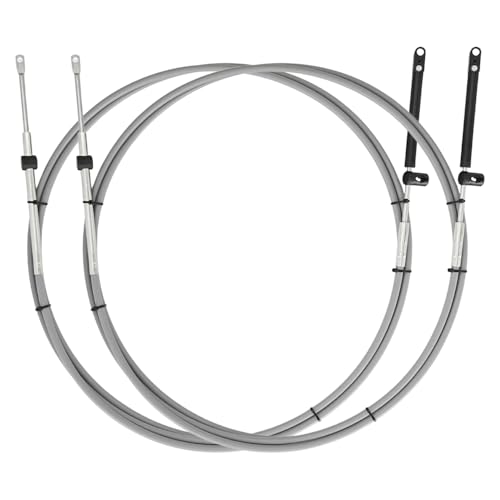
BOATCON 14FT Boat Throttle and Shift Cables,GEN I Remote Control Cable For Mercury Outboard 2pcs/set
Boatcon GEN I Throttle and Shift Cable is a Direct replacement for the SeaStar Solutions 600A Series style cables,For Mercury/MerCruiser/Mariner/Force and most Force engines.
Neglecting Essential Engine and Mechanical Preparations

Many speed boat operators focus solely on mastering their throttle control and docking skills, yet overlooking the significance of engine and mechanical preparations can spell trouble. Neglecting pre-season checks could lead to costly mishaps.
Engine Maintenance
- Regular oil and filter changes every 100 hours guarantee a healthy engine.
- Don’t forget the cooling system—flushing it prevents overheating disasters.
- A neglected fuel system can starve your boat, leading to frustrating stalls.
Mechanical Inspections
- Inspect belts and hoses for wear; a snapped hose could sink your day.
- Propellers need attention too—check for damage or debris that might affect performance. For instance, using high-quality propeller materials can significantly enhance performance and lifespan.
With these essential preparations in place, operators can enjoy smooth sailing, avoiding unwanted surprises on the water.
Recommended Products

VERSATILE USE: Ideal for flushing outboard motors, rods and reels, lures, and any metal equipment exposed to salt water. Also works great for removing road salt in winter conditions

ULTIMATE SALT PROTECTION: Safeguard your marine engine and boat surfaces with STAR BRITE Salt Off, formulated to remove and prevent harmful salt deposits

VERSATILE CLEANING AND FLUSHING: This hose-end sprayer works both as a soap dispenser for boat and car wash or as an engine flushing solution to remove salt and other deposits. Compatible with any standard hose, it makes cleaning and flushing simple.
Overloading and Poor Load Distribution
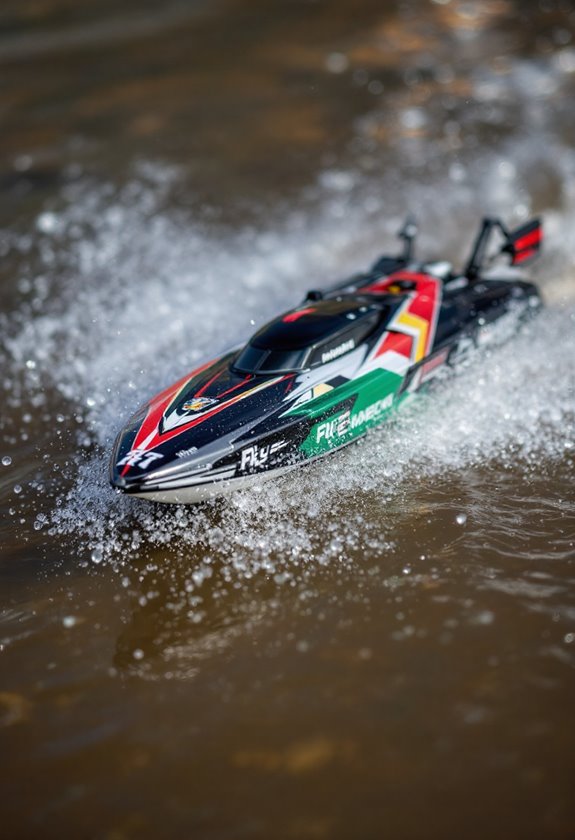
Overloading and poor load distribution can turn a joyful day on the water into a perilous experience in mere moments. When a speed boat exceeds its load capacity, it risks capsizing and decreased stability—particularly in choppy waters. The U.S. Coast Guard reported that overloading contributed to 55 fatalities in 2022 alone.
Ensuring balanced weight distribution is essential. An uneven setup, whether too many passengers at the bow or heavy gear improperly placed, can drastically shift the center of gravity, leading to loss of control.
To sail safely, adhere to manufacturer weight limits and regularly check your load. Keep gear secured and minimize unnecessary items on board. This attention to detail could mean the difference between relaxation and disaster. Additionally, understanding proper load capacity considerations is crucial in preventing accidents and maintaining stability on the water.
Recommended Products

ACCURATE TRAILER TONGUE WEIGHT SCALE FOR SAFE TOWING: Measure tongue weight with precision using a trailer tongue weight scale. Ideal as a tongue weight scale for travel trailers, helping maintain proper weight distribution & reduce trailer sway.

1800 lbs Heavy-Duty Capacity, built with strong carbon steel to handle your toughest loads with reliability

Digital shipping postal scale for weighing items; heavy duty yet lightweight, portable design
Ignoring Weather Conditions and Navigational Basics

When the sun shines and the waves beckon, it’s all too easy for novice boaters to overlook the critical importance of weather conditions and navigational practices. Ignoring weather alerts, such as small craft advisories or gale warnings, can turn a delightful outing into a perilous situation. New boaters should consistently check official marine forecasts and use navigational aids, including marine charts, to plot safe routes.
Unforeseen storms can arise quickly—squalls can flip boats if not properly navigated. Properly securing gear and ensuring all passengers wear life jackets at all times enhances safety. Additionally, understanding wind patterns and approaching waves correctly can greatly improve stability and control, ensuring everyone enjoys the bliss of boating without regret. Before heading out, it’s advisable to review the fuel efficiency considerations of gas-powered RC boats to avoid any unnecessary mishaps.
Mismanagement of Boat Trim and Handling Mechanics
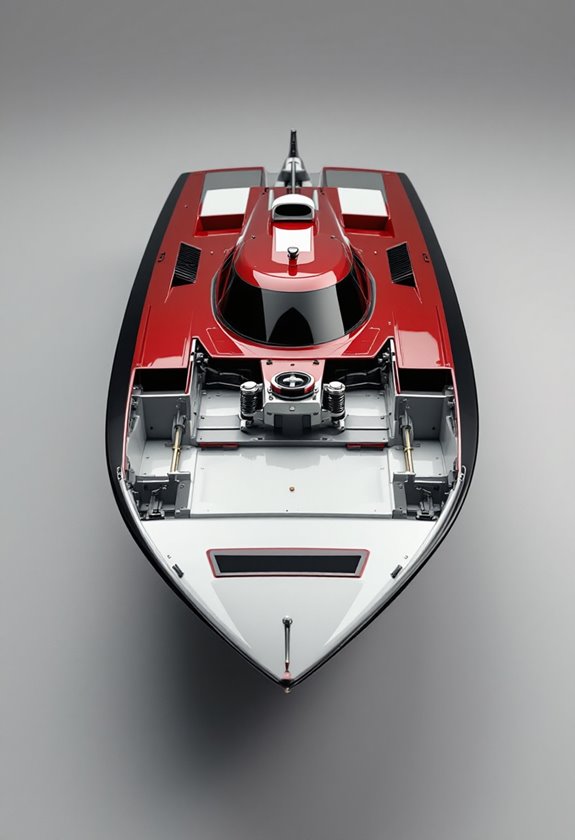
Effective management of boat trim and handling mechanics is essential for novice boaters who wish to elevate their experience on the water. Mismanagement in these areas not only affects safety but also performance.
- Trim Adjustments: Incorrect angles can lead to drag, poor fuel efficiency, or even porpoising. Find the sweet spot by gradually raising the trim until the bow bounces slightly, then lower it to stabilize.
- Handling Techniques: Fail to adjust for water conditions, and the boat may pound through waves or list dangerously. In sharp turns, trim down to maintain thrust and control—don’t let that prop break water tension!
Monitoring boat response is vital; overreliance on indicators can lead to unpleasant surprises. Additionally, understanding the importance of battery life in high-speed RC boats can significantly enhance your overall performance on the water. Embrace these techniques to enjoy smoother and safer boating adventures.
Recommended Products

【Function】 Trim gauge will accurately displaythe balance or inclination of boat. Indication range: UP-DN, Signal: 0-190ohm.

【Function】 Trim gauge will accurately displaythe balance or inclination of boat. Indication range: UP-DN, Signal: 0-190ohm.

Faria 13807 Chesapeake Stainless Steel Trim Gauge (Mercury/Mariner/Mercruiser/Volvo DP/Yamaha 2001 and Newer) - 2", White
Mistakes During Trailer Setup and Launching
Boat handling is only part of the adventure; proper trailer setup and launching are equally important for a fun day on the water. Beginners often stumble with trailer alignment, resulting in miscommunication between vehicle and boat. Avoid overcorrection while reversing—small, steady steering adjustments guarantee the trailer follows in line.
Safety Checks are essential before heading to the water. Confirm the trailer hitch is secure, lights function, and tires are properly inflated to avoid blowouts. Additionally, ensure that your trailer is designed for specific models to enhance towing capabilities and performance.
When launching, select ramps suitable for your setup. Position your trailer just enough to let the boat float off—too deep, and corrosion risks arise. Remember, a cautious approach to trailer use and safety checks makes all the difference for beginners traversing the bolts of boating.
Recommended Products

[Awesome Lights] Each boat trailer guide post lights built-in 12 red LED + 12 amber LED, provide super bright lighting, helps you guide your boat in the dark. The amber light faces the front, and the red light faces the rear
![Partsam 2pcs Boat Trailer Guide on Post Pipe Light Set, [DOT Approved] [Patented] IP67 Waterproof Black Boat Trailer Pole Lights, Turn Signal Brake Tail Lights 12V](https://m.media-amazon.com/images/I/41nDAX7mT8L._SL500_.jpg)
[Awesome Lights] [Patented] The boat trailer guide on post pipe guide light set built-in advanced SMD type LED, brighter than regular LED, provide super bright lighting to help you guide your boat in the dark

USA BASED, DESIGNED & TESTED: Our LED Trailer Guide Post Light Set has features that others don't. Bright IP67 waterproof LED lights with true marine tinned wire. Designed to last and tested in tough saltwater conditions. Our PVC pole light set fits on very common 2" guide posts.
Failing to Adhere to Marine Etiquette and Safety Standards
Neglecting marine etiquette and safety standards can swiftly transform a leisurely day on the water into a chaotic—and potentially dangerous—experience. In Texas, operating a vessel without required safety equipment, such as U.S. Coast Guard-approved life jackets, is illegal and can result in hefty fines. Think of safety equipment as the unsung heroes of boat safety—always on standby.
Moreover, the importance of boating education cannot be overstated. A Texas Boater Education Certificate is essential for anyone born after September 1, 1993. Courses covering legal responsibilities and emergency responses greatly reduce accident risks.
Frequently Asked Questions
What Should I Wear for My First Speed Boat Outing?
For a first speed boat outing, one should wear light, quick-drying clothing, secure non-slip footwear, and consider weather factors by adding layers. Accessories like sunscreen and sunglasses also enhance safety and comfort on the water.
How Do I Properly Store My Speed Boat During Winter?
To properly store a speed boat during winter, one should follow a winterization checklist that includes inspecting components and selecting an appropriate storage location—preferably climate-controlled—to prevent damage from moisture and temperature fluctuations.
What Are the Best Practices for Boat Maintenance?
A steadfast lighthouse guiding a ship’s safe passage symbolizes diligent boat maintenance. Regular boat cleaning combined with meticulous engine care preserves performance, ensuring adventures remain smooth, like a gentle breeze against a well-kept sail.
How Can I Improve My Boating Skills Quickly?
To improve boating skills quickly, beginners should focus on mastering essential boating techniques, participate in hands-on practice, and seek guidance from experienced mentors, enabling efficient learning and fostering confidence on the water. Regular review enhances knowledge retention.
What Safety Gear Is Essential for Speed Boating?
Essential safety gear for speed boating includes personal flotation devices for every passenger, emergency signaling devices like flares or flags, fire extinguishers, sound-producing gadgets, navigation lights, and a first aid kit for preparedness.


