As an Amazon Associate, we earn from qualifying purchases. Some links on this site are affiliate links at no extra cost to you. Our recommendations are based on thorough research and editorial judgment.

How to Balance Keel and Ballast

To balance a sailboat’s keel and ballast effectively, start with strategic keel placement—forward positioning enhances control. The ballast should align the longitudinal center of gravity (LCG) with the center of buoyancy (LCB) for ideal stability. Maintain a positive righting moment (GZ) to prevent capsizing; higher metacentric height (GM) equals better stability. Think of finding the sweet spot—like balancing on a seesaw. Proper testing confirms performance, ensuring a smoother sail. Learn how designs can innovate these balances further.
Key Takeaways
- Position the keel correctly to align with the vessel’s center of buoyancy for optimal stability and maneuverability.
- Distribute ballast evenly to ensure proper longitudinal center of gravity alignment, minimizing unwanted pitching and maintaining trim.
- Use advanced ballast designs like canting keels for weight reduction, improving speed and sailing efficiency.
- Regularly test the vessel’s stability through heel angle calculations and righting arm analysis to ensure safe operational limits.
- Adjust ballast dynamically for changing sailing angles to enhance hydrostatic balance and overall performance.
Understanding Keel Placement
Understanding the nuances of keel placement is essential for achieving peak sailboat performance—think of it as the foundation of a well-crafted home, where every element must be precisely positioned for stability. The heart of keel dynamics rests in its location relative to the hull and rudder, which directly influences lift and course stability.
Key considerations include:
- Forward Placement: Positioning the keel closer to the bow enhances steering control and stabilizes the boat’s pivot.
- Depth Matters: A deep, narrow keel reduces drag while maximizing lift, unlike wider designs that falter under speed.
- Dynamic Adjustments: The keel’s angle must adapt to shifting hydrodynamic forces, allowing for fluid maneuverability.
Ultimately, a well-placed keel can transform a sailboat into a graceful dancer, gliding effortlessly across the water. Additionally, understanding the impact of maximum speed and power can also influence the overall design and effectiveness of the keel in enhancing performance.
Importance of Ballast Positioning

Keel placement lays the groundwork for a sailboat’s performance, but the importance of ballast positioning cannot be overstated. Proper ballast distribution is crucial for achieving balance fore and aft. This guarantees the longitudinal center of gravity (LCG) aligns with the center of buoyancy (LCB), promoting ideal sailing conditions.
- Pitching Moments: Correct ballast placement reduces unwanted pitching, essential for maintaining trim.
- Performance Tuning: Adjusting ballast position can enhance speed and handling, especially during speed changes or varying sailing angles.
With the main hatch often near the LCG, it simplifies ballast installation. However, even slight adjustments can dramatically affect performance, making the meticulous tuning of ballast a key component in sailing success—like finding the perfect recipe for your favorite dish! Additionally, understanding battery life expectations can also influence your sailing strategy, particularly when planning for extended outings on the water.
Righting Moment and Stability
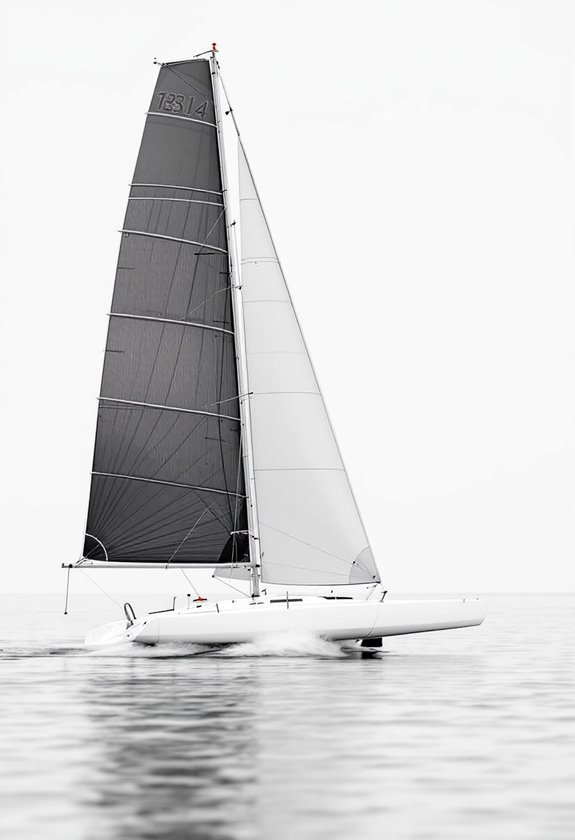
In the intricate ballet of sailing, the righting moment plays a starring role, working diligently behind the scenes to guarantee a vessel remains upright. The righting moment is calculated by multiplying displacement (W) by the righting arm (GZ) — think of it as the torque that endeavors to bring a leaning ship back to equilibrium.
- GZ varies with heel angles; it’s small at first but grows, peaking before tapering off.
- A positive GZ means stability, while zero or negative GZ spells trouble.
Stability evaluation hinges on two critical factors: the metacentric height (GM) and the relationship between the center of gravity and buoyancy. Proper management of these elements cultivates a vessel’s resilience against capsize, ensuring a safer sailing experience for all aboard. Additionally, incorporating features such as self-righting mechanisms can enhance stability and safety during turbulent conditions.
Recommended Products
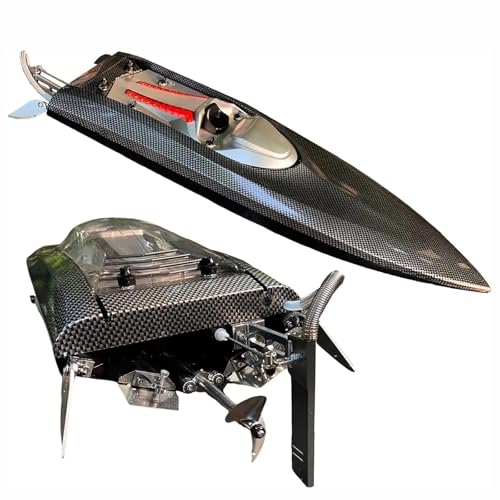
Dimensions: 630*170*110mm/25*7*4.3inch . Standard 11.1V 3S Edition .

Bright SOS Distress Signal – Flashes the internationally recognized SOS signal in Morse code, with a runtime and brightness 2.5 times longer than U.S. Coast Guard requirements, ensuring high night-time visibility during emergencies.

High-Speed RC Boat with Stable Control – This 25 KPH fast RC speed boat delivers exciting performance on lakes, pools, and rivers. Equipped with a 2.4GHz anti-interference remote system, multiple RC boats can race together without signal conflict. With a control distance of up to 500 ft (150 m), this remote control boat for kids and adults offers responsive steering and smooth acceleration.
Canting Ballast Keel Design

With the demands of modern racing, a canting ballast keel design emerges as a game changer for high-performance sailing vessels. This innovative system utilizes canting technology to enhance sailing efficiency dramatically. Key components include:
- Hydraulic mechanisms that move a heavy ballast bulb attached to a slender strut, allowing the keel to pivot smoothly.
- The canting motion effectively offsets wind pressure, enabling boats to sail flatter and faster—a significant advantage in competitive racing.
Compared to traditional fixed keels, canting keels can reduce ballast weight by up to 60%, allowing for lighter vessels capable of impressive speeds exceeding 30 knots. By harnessing this cutting-edge technology, sailors can optimize their performance while increasing sail area for greater propulsion, redefining the limits of modern sailing. Additionally, high-speed capabilities are essential for maximizing competitive advantage in both sailing and RC speed boat racing.
Physical Principles of Balance

Understanding the physical principles of balance is essential for optimizing performance on the water, especially as sailing technology evolves.
Key Elements of Balance
- Center of Gravity (CoG) vs. Center of Buoyancy (CoB): Stability hinges on their vertical and horizontal alignment. When a yacht heels, CoG shifts less laterally than CoB, affecting force distribution.
- Righting Moment: Arising from the torque difference between gravitational and buoyancy forces, a lower CoG enhances stability.
- Torque & Static Equilibrium: Balance can be visualized as a system where forces sum to zero—without this, a boat could tip or spin like a top on its side! Additionally, understanding battery life can play a crucial role in maintaining the stability of RC submarines during underwater operations.
Water Ballast Systems
Water ballast systems serve as a fascinating blend of engineering and fluid dynamics, enhancing the stability of vessels while maneuvering various aquatic environments. These systems utilize ballast tanks to hold water, which effectively replaces traditional solid ballast types like rocks or iron. This shift allows for easier adjustments to weight distribution and draft control, guaranteeing safety during voyages.
Key functions include:
- Improved Stability: Water ballast helps correct trim and list issues.
- Dynamic Adjustments: Tanks can be filled when cargo may be light, promoting better hydrostatic balance.
Moreover, robust water treatment processes, essential for ecological compliance, ascertain that invasive species are managed—a significant aspect, as improper discharge can threaten local marine ecosystems. Furthermore, effective balance management in vessels is critical for optimizing performance and ensuring safety during operation. Fundamentally, balanced water management in vessels is imperative for operational success and environmental protection.
Recommended Products

Flow Rate: 9 gallons per minute / 80 lbs. per minute
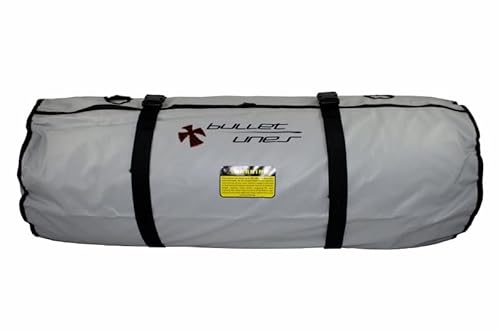
Wakesurf Boat Ballast Bag w/ Cover, Our heavy duty cover has 2 easy access holes for the fill and drain valves, heavy duty zipper, and straps for repositioning when full.

Belzona 1212 Surface Tolerant Epoxy Repair Composite. 450g one Kit. Two Parts Base A 205g + Solidifier B 245g. In-situ / Wet / Oil / Underwater Application. Plate Bonding Engine Gearbox Sealing. Rapid Cure Strong Adhesion Solvent Free.
Practical Considerations for Design
Designing a keel and ballast system is akin to orchestrating a symphony—every component must harmonize perfectly to guarantee peak performance and stability on the water. Key considerations include:
- Keel Geometry: This influences the fin’s size, which directly affects performance. A well-designed keel can greatly enhance a boat’s hydrodynamic efficiency.
- Material Selection: Using dense materials like lead for ballast allows for greater efficiency. The density enhances stability while adhering to design constraints.
Achieving the right balance often involves trade-offs between draft limitations dictated by cruising grounds and hydrodynamic efficiency. Additionally, accurately positioning ballast lowers the vertical center of gravity, ensuring the vessel remains steady. It’s much like trying to find the perfect weight distribution in a tightrope act—one miscalculation can lead to a tumble!
Recommended Products

EASY SELF FILL / LEAK PROOF SEAL – Simple roll top hook and loop closure opens wide for easy fill and closes quickly and securely. Tall roll top gives a leak proof seal to keep your boat clean.


No Toxic Exposure – Unlike lead shot bags, these wake bags are loaded with fine recycled steel shot.
Testing Stability and Performance
Definition of key parameters helps illuminate stability’s intertwined factors:
Stability testing assesses a vessel’s ability to resist heeling and regain an upright position. Critical methods include:
- Inclining Test: Measures righting moment, vertical center of gravity (VCG), and limit of positive stability (LPS) in calm waters, free of personnel.
- DIY Testing: Involves shifting weights to calculate heel angle for determining metacentric height (GM).
Data garnered from these tests connects directly to performance predictions; more stable vessels can carry larger sail areas, improving speed and maneuverability. A boat with a higher GM signifies enhanced stability—just like a well-balanced toddler can zip, minus the wobble. By systematically analyzing heel angles and righting arms, mariners can confidently navigate their vessels within safe operational limits, ensuring safe voyages ahead.
Recommended Products

PREMIUM STAINLESS STEEL CONSTRUCTION: Mirror-polished stainless steel delivers superior corrosion resistance, long-term durability, and a high-end finish that enhances any boat’s appearance.

[2024 New Design]XGSW XINGESIWR 2024 Power Cage L05 can provide more muscle training and true home fitness without adding more accessories.

【Convenient Modular Design】The foldable fishing boat features a modular structure for easy storage and transportation. It is simple to use and can be quickly assembled in a short amount of time without any additional tools.
Frequently Asked Questions
How Does Weather Impact Keel and Ballast Effectiveness?
Weather greatly impacts keel and ballast effectiveness, with strong wind conditions and high wave height potentially causing instability. Proper ballast adjustments are essential to counteract forces exerted by adverse weather, ensuring ideal ship stability and safety.
Can I Modify My Existing Keel Design for Better Balance?
Modifying an existing keel design for better balance is feasible; strategic alterations can refine ballast placement, illuminating stability. However, careful consideration of the vessel’s dynamics and rigging remains essential to avoid unintended consequences during performance.
Are There Alternative Materials for Ballast Besides Lead?
Various ballast alternatives exist beyond lead, including eco-friendly options like Perma Ballast®, which provide durability and stability without toxic risks. Innovations like ballast-free designs further enhance vessel efficiency while reducing environmental impacts associated with traditional materials.
How Often Should I Inspect My Ballast System?
Ballast systems require regular inspections, typically annually, to guarantee safety and compliance. With up to 30% of vessels failing ballast maintenance audits, an established inspection schedule is essential for maintaining operational integrity and preventing structural failures.
What Tools Are Necessary for Balancing a Sailboat?
Necessary tools for balancing a sailboat include inclinometers, load cells, hydraulic rams, and sensors, which help assess sailboat stability and optimize ballast weight for improved performance and safety during sailing maneuvers and conditions.


