As an Amazon Associate, we earn from qualifying purchases. Some links on this site are affiliate links at no extra cost to you. Our recommendations are based on thorough research and editorial judgment.

Hydrodynamics Basics for Keel and Hull

Hydrodynamics is essential for designing efficient keels and hulls. Understanding hull dynamics involves recognizing total hull resistance, including viscous and wave-making resistance, which impacts speed and fuel efficiency. Key principles, like Bernoulli’s, help optimize hull shapes, reducing drag and enhancing stability. Additionally, keel design is vital for lateral resistance, influencing the vessel’s maneuverability. Imagine a sleek sailboat slicing through waves—its streamlined hull minimizing turbulence. For those curious about optimizing performance further, exciting insights await in the next sections.
Key Takeaways
- Total hull resistance comprises viscous resistance, wave-making resistance, and air resistance, which all affect vessel performance.
- Keel design influences lateral resistance and stability by aligning the Center of Lateral Resistance with the Center of Effort.
- Streamlined hull shapes reduce drag and improve fuel efficiency, enhancing speed and stability through optimized hydrodynamic performance.
- Hydrodynamic forces acting on the hull can lead to structural challenges like fatigue cracking, necessitating resilient design and material choices.
- Using computational fluid dynamics and genetic algorithms can optimize hull design for improved seakeeping and efficient navigation in challenging waters.
Understanding Hull Dynamics
Understanding hull dynamics is vital for anyone interested in naval architecture or marine engineering. The interplay of hull vibrations and resistance metrics plays a central role in a vessel’s performance.
- Total Hull Resistance (RT) comprises:
- Viscous Resistance (RV): Water friction, essential at lower speeds.
- Wave-Making Resistance (RW): Increases notably at higher speeds due to bow and stern wave formation.
- Air Resistance (RAA): Though minor, contributes to overall resistance.
To optimize efficiency, hull design focuses on:
- Smooth surfaces that minimize pressure variations.
- Gradual changes in shape, avoiding abrupt velocity shifts.
Effective designs guarantee that the hull remains streamlined, enhancing stability while effectively reducing resistance. This balance can notably influence a ship’s speed and fuel efficiency, making it imperative for engineers to master these concepts. Additionally, effective hull designs can include self-righting capabilities, ensuring stability and performance even at high speeds.
The Role of Bernoulli’s Principle in Hull Design

The intricate dance of fluid dynamics around a vessel’s hull reveals the profound impact of Bernoulli’s principle on hull design. This principle helps in understanding pressure coefficients and velocity distribution as water flows over the hull’s curvature. Designers aim for shapes that minimize drag reduction while maximizing lift generation.
Key considerations include:
- Flow Separation: Smooth surfaces keep water attached longer, reducing turbulence.
- Stability Margins: Adequate pressure management helps maintain balance, especially in constricted waters.
- Design Iterations: Continuous refinement using Bernoulli’s insights allows for enhanced performance.
Additionally, modern hulls often incorporate design features that leverage hydrodynamic shapes for improved speed and maneuverability.
Analyzing Hydrodynamic Forces on Hull Structural Integrity
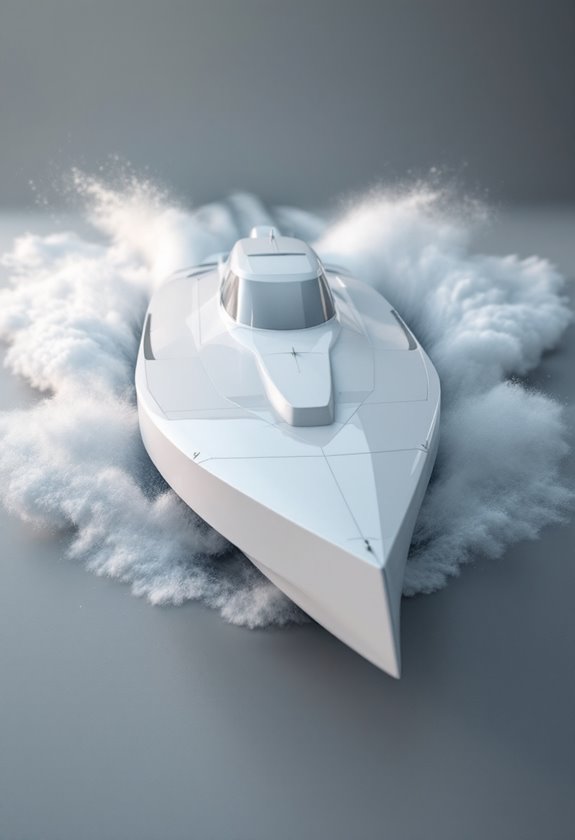
Analyzing hydrodynamic forces on hull structural integrity reveals an essential interplay between water dynamics and vessel resilience. The hull experiences a myriad of transient impacts, such as slamming and wave slap, which generate significant hydrodynamic forces. These forces can lead to various structural issues, including:
- Deformed shell plating
- Buckled longitudinals and frames
- Fatigue cracking
Such damage often stems from direct impulses and high-frequency whipping. To protect structural integrity, hull designs must optimize shape and materials to distribute stress thoroughly. Additionally, predicting hydrodynamic loads through analytical methods guarantees vessels can withstand the demands of oceanic conditions. Ultimately, a robust design can prevent catastrophic failures, maintaining safety and durability in marine operations. The successful performance of RC boats, particularly those with advanced control systems, depends on understanding these hydrodynamic principles.
Recommended Products

Pre-assembled hubs for a clean and simple installation

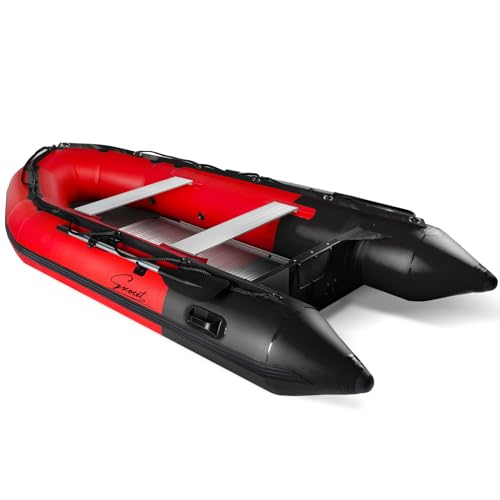
Durable & Safe: Crafted with multi-layer PVC material and coated with Tager powder, features precision robotic thermal welding seams for high-strength, one-piece construction that minimizes deformation. The hull undergoes over 30,000 abrasion and puncture resistance tests, delivering exceptional scratch resistance, oxidation resistance, and UV protection. Perfectly adapted for both freshwater and saltwater environments. four independent air chambers guarantee safety flotation even if damaged
Fuel Efficiency and Performance Enhanced by Hydrodynamics
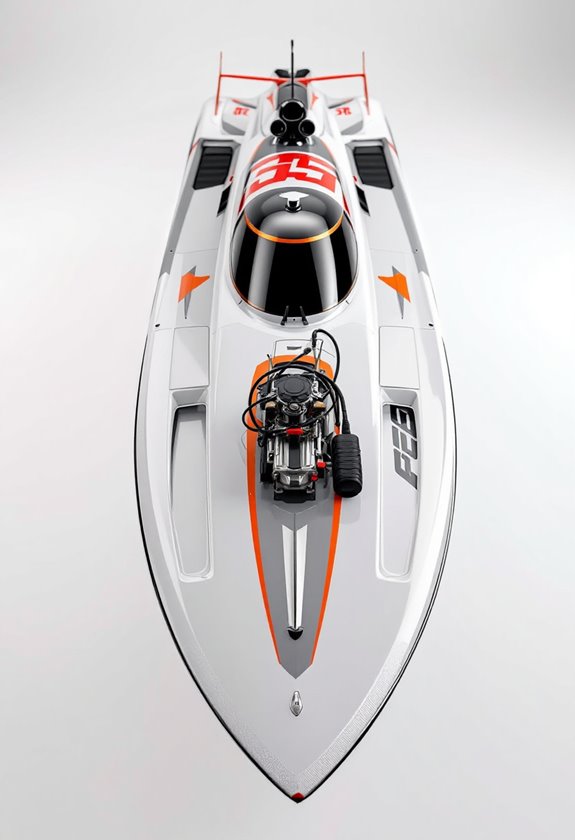
As vessels glide through the water, the intricate dance of hydrodynamics plays an essential role in enhancing fuel efficiency and performance.
- Hull Optimization: Streamlined designs cut down on drag, making waves less of a foe. This can lead to a 10–20% reduction in fuel use—enough to make any captain’s heart skip a beat!
- Propeller Efficiency: Perfecting the shape and pitch of propellers maximizes thrust while minimizing cavitation, creating a smoother ride that feels less like a rollercoaster and more like sailing on silk. Many high-performance boats, such as those equipped with brushless motors, further improve efficiency and speed through advanced hydrodynamic principles.
Recommended Products

Built for Saltwater & Freshwater: Corrosion-resistant construction with stainless-steel motor housing and surface treatment, plus durable composite fin structure for seawater and lake/river use

2-in-1 Water Bike & Kayak Hybrid for Endless Fun: Revolutionize your water adventures with this 126" x 45.6" x 42.5" innovative inflatable water bike and kayak combo. Featuring 2 high-capacity float tubes and a 304 stainless steel bike system, this hybrid is perfect for cycling or paddling on lakes, rivers, and beaches. Ideal for outdoor enthusiasts seeking a unique and thrilling water experience
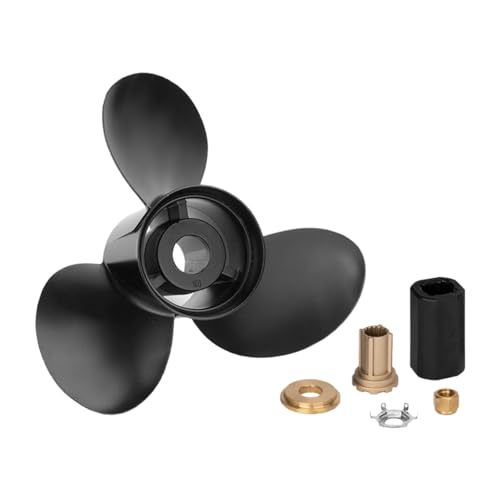
1.【Model Characteristic】: Fits Outboard Boat Motos 90CT-400HP and Mercruiser Alpha One Sterndruves Engines, please refer to below product description for detailed engines application.
Importance of Keel Design for Lateral Resistance

In the domain of sailing, where every gust of wind can send a vessel off course, keel design serves an indispensable role in managing lateral resistance. The effectiveness of various keel types—whether fixed, lifting, or bulb—depends on their hydrodynamic shapes, which influence lift generation against lateral forces from the wind.
- Performance Metrics: Proper design optimization enhances sailing efficiency by allowing vessels to sail closer to the wind.
- Stability Considerations: A well-balanced Center of Lateral Resistance (CLR) must align with the sail’s Center of Effort (CE) to prevent excessive heeling.
- Resistance Profiles: Each keel’s unique shape impacts lift-to-drag ratios, fine-tuning overall performance.
Ultimately, the balance of lateral resistance and vessel stability is vital for traversing both calm waters and tempestuous seas. Additionally, the use of premium materials like wood and stainless steel in some keel designs further contributes to overall durability and performance in various sailing conditions.
Recommended Products

ROCK SOLID - To deliver reliability on the open water, this claw anchor is built from stainless steel. Not only that, but the steel is one-piece, high-grade stainless for strength and natural corrosion resistance

All of our boats come with 3 year manufacturer warranty. Guarantee begins when product is delivered.

BUILT TO LAST - This boat anchor is made with a strong high-grade manganese steel for durability even in the harshest marine environments
Evaluating Hull-Wave Interaction Effects
Evaluating hull-wave interaction effects reveals an intricate dance between a ship and the waves it encounters, a phenomenon impacting everything from resistance to performance. The Froude number (Fr) plays a vital role here—at certain speeds, constructive wave interference can lead to higher resistance—think of it as a rollercoaster ride gone wrong!
Key insights include:
- Wave Interference: At Fr 0.283, waves overlap creating elevated wave heights; at Fr 0.325, they cancel each other out, reducing resistance.
- Pressure Variations: Hull surfaces experience dynamic changes due to wave angles—oblique encounters can cause added resistance.
- Propeller Interactions: Neglecting these effects can lead to significant miscalculations in required propulsive power.
- *The relationship between scale model accuracy and hydrodynamic performance is crucial in optimizing a vessel’s efficiency.*
Understanding these factors is essential for optimizing ship design and performance.
Advanced Computational Fluid Dynamics in Hull Optimization
How can ships glide through water more efficiently than ever before? Advanced Computational Fluid Dynamics (CFD) plays an essential role in hull optimization, leveraging sophisticated CFD algorithms to refine ship designs. By incorporating turbulence modeling, engineers achieve high simulation accuracy—resulting in improved resistance prediction.
Key elements of this process include:
- Iterative Design: Continuous refinement of hull shapes leads to optimum performance metrics.
- Flow Visualization: This allows for detailed analysis of fluid behavior around the hull, enhancing understanding and adjustments.
Through digital simulations, vessels can achieve significant reductions in drag, translating to fuel savings. Ultimately, advanced CFD not only paves the way for more efficient ships but also enhances the engineering experience—turning complex concepts into powerful solutions.
Recommended Products
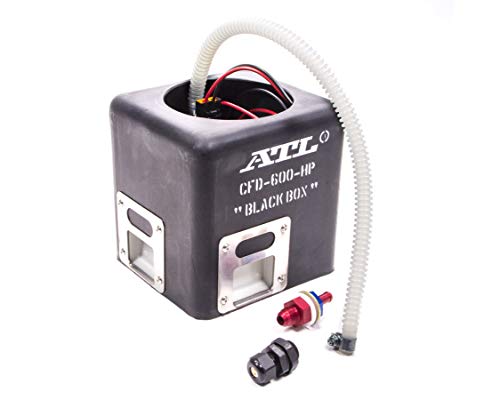
ATL Surge Tank 102 lph Black Box Electric Fuel Pump Kit P/N CFD-600-HP
Balancing Stability and Maneuverability With Keel Design
Balancing stability and maneuverability in keel design is akin to walking a tightrope; it requires precision and an understanding of the delicate interplay between various factors. Keel types greatly influence this balance:
- Long Keels enhance stability and tracking but sacrifice maneuverability in tight spaces.
- Fin Keels, shorter and deeper, promote speed and responsiveness but can lead to leeway drift.
- Bulb Keels optimize performance by placing ballast low, resulting in minimal drag.
Maneuverability considerations often lead to stability trade-offs. For example, while longer keels improve resistance to sideways drift, they can create drag that limits quick maneuvers. Consequently, achieving a performance balance hinges on meticulous design choices that cater to intended use—whether cruising or racing—illustrating the art of keel design in action.
Optimizing Hull Shapes for Improved Seakeeping
Optimizing hull shapes for improved seakeeping is essential for vessels to navigate challenging waters with grace and efficiency. Hull optimization techniques, such as utilizing genetic algorithms and computational fluid dynamics, allow designers to refine hull geometries that markedly enhance seakeeping performance. Key parameters like the block coefficient (CB) and midship coefficient (CM) play critical roles—changes in these coefficients primarily affect pitch motion, impacting both comfort and operational capability.
To reduce vertical accelerations and enhance ride stability, designers alter hull shapes, which can shift natural frequencies, minimizing resonance with wave conditions. Overall, the right hull form not only boosts operational efficiency but also assures vessels can tackle rough seas effectively—making each journey safer and more enjoyable for crew and cargo alike.
Frequently Asked Questions
How Does Hull Shape Affect Overall Vessel Speed?
Hull shape greatly influences overall vessel speed by enhancing hull efficiency and facilitating resistance reduction. Streamlined designs minimize drag, allowing higher speeds with lower power consumption, while poorly shaped hulls contribute to increased resistance and decreased performance.
What Materials Are Best for Hull Construction?
Each boat is a canvas, painted with materials reflecting its purpose. Aluminum alloys, fiberglass composites, wood lamination, and steel plating each offer unique strengths, crafting vessels that glide through water or withstand the harshest conditions.
How Is Hull Maintenance Related to Hydrodynamics?
Hull maintenance is essential for hydrodynamics, as regular hull inspections and effective antifouling techniques minimize surface roughness. This reduces drag, enhances fuel efficiency, and maintains ideal performance, directly impacting a vessel’s operational costs and environmental footprint.
Can Hull Design Influence Crew Comfort on Board?
Hull design greatly influences crew comfort on board by optimizing crew positioning and interior layout. Effective hull shapes reduce uncomfortable motion, enhance stability, and improve overall ride quality, contributing to better performance and wellbeing for the crew.
What Role Does Weather Play in Hull Performance?
Weather greatly affects hull performance through varying wave patterns and wind effects. Strong winds can alter vessel dynamics, while turbulent waves increase drag and resistance, often necessitating slower speeds and leading to increased fuel consumption and potential hull damage.


