As an Amazon Associate, we earn from qualifying purchases. Some links on this site are affiliate links at no extra cost to you. Our recommendations are based on thorough research and editorial judgment.


Sonar Distance Sensing On RC Subs

Sonar distance sensing is essential for RC submarines, enabling precise navigation and obstacle detection underwater. These systems come in two main types: active, which emits sound pulses for detailed mapping, and passive, which listens for environmental sounds. However, challenges like acoustic shadows and environmental noise can complicate measurements. With advanced features like multi-frequency capabilities and adaptive filtering, sonar technology dramatically improves underwater exploration. Want to discover how these systems evolve? There’s more fascinating insight ahead!
Key Takeaways
- Sonar technology in RC submarines uses sound waves for accurate distance sensing and obstacle detection underwater.
- Active sonar emits sound pulses for precise depth mapping, while passive sonar detects ambient sounds for stealth.
- Calibration techniques are essential to mitigate measurement inaccuracies caused by environmental factors and acoustic shadows.
- Advanced sonar features, like adaptive filtering and multi-frequency capabilities, enhance signal clarity and operational efficiency.
- User expectations are rising for sophisticated sonar systems, offering improved navigation and exploration functionalities in RC submarines.
Understanding Sonar Technology for RC Subs
While many may picture submarines gliding silently through the depths of the ocean, the science of sonar technology is at the heart of their navigation and obstacle detection. This remarkable system operates by emitting sound waves at various sonar frequencies and measuring the echoes that bounce back. It helps determine the distance, size, and type of underwater obstacles—like a superhuman hearing aid.
Key features of sonar technology include:
- Active Sonar: Emitting sounds and listening for echoes.
- Passive Sonar: Eavesdropping on ambient noises.
- Echo Processing: Transforming sound back into electrical signals.
Through these methods, submarines can effectively navigate and avoid dangers lurking below, making sonar a vital tool for the underwater explorer’s journey. Additionally, some models utilize enhanced features that improve operational effectiveness during underwater missions.
Recommended Products

SENSOR ADVANTAGE: The ultrasonic underwater ranging sensor has the advantages of compact size, small blind spot (minimum 2cm), and high accuracy.

Multifunctional remote-controlled submarine: This nuclear submarine remote-controlled toy has 6 channels, which can realize diving/surfacing functions, and is equipped with two front navigation lights, which are flexible and diverse in operation.
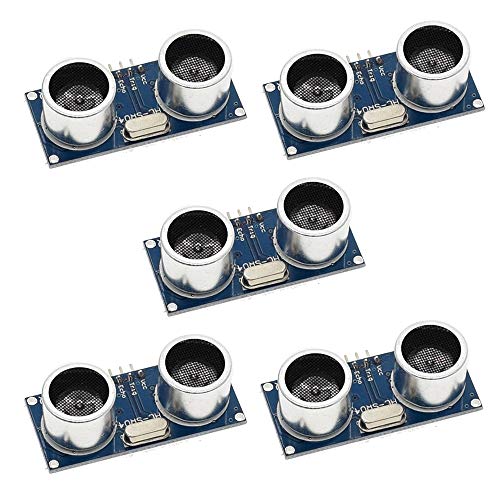
HC-SR04 Ultrasonic Sensor Distance Module: using IO trigger for at least 10us high level signal
Types of Sonar Systems Used in RC Submarines

- Active sonar: Emits sound pulses for precise mapping, ideal for detailed distance sensing but risks revealing the submarine’s location.
- Passive sonar: Listens for environmental sounds, making it covert yet less accurate for range detection.
Other specialized systems, such as Variable Depth Sonar (VDS) and towed array sonar, enhance detection capabilities by adapting to specific sonar application scenarios. VDS operates effectively across thermal layers, while towed arrays reduce self-noise for clearer acoustic data. Each system embodies a unique approach to obstacle avoidance and target tracking, seamlessly integrating advanced technology into the underwater world of RC submarines. Additionally, the simulation realism in today’s submarines allows for enhanced play experience that utilizes these sonar systems for better navigation and interaction with underwater environments.
Recommended Products

4-channel wide spectrum CHIRP transducer with DownVision, SideVision, high frequency CHIRP and RealVision 3D sonar
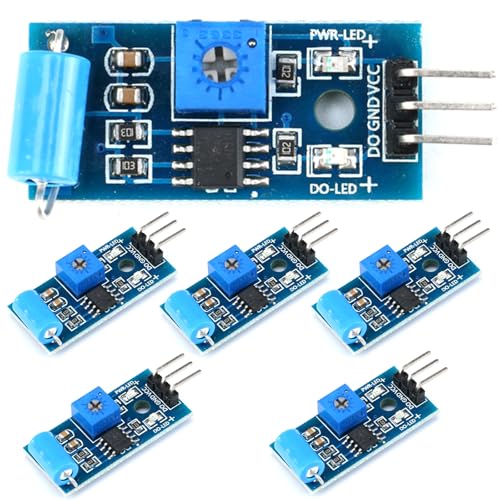
**Reliable Vibration Detection:** Enhance your Arduino projects with the SW-420 Vibration Sensor Module, Well-suited for creating custom alarm systems or detecting motion with precision.

Hiletgo SW-420 Vibration Sensor Module
Distance Measurement Accuracy and Challenges

To combat inaccuracies, submarines utilize sonar calibration techniques, ensuring consistency across varying conditions. However, challenges remain. Objects in the water can cast acoustic shadows, complicating detection. Furthermore, close proximity to surfaces may create blind spots, as the sensors struggle to register distances less than 10 cm. Ultimately, achieving reliable measurements involves maneuvering both environmental complexities and technology’s inherent limitations, demanding both finesse and precision in operation.
Comparing Sonar and Laser Distance Sensors

Sonar and laser distance sensors represent two distinct technological solutions for measuring distances, each tailored to specific environments and applications. Sonar works by sending sound waves underwater, bouncing echoes back to measure distance—ideal for aquatic settings, but susceptible to signal interference from environmental noises. Conversely, laser sensors utilize light pulses to achieve higher accuracy and resolution in clear air, but they can falter in fog or water turbidity. RC submarines have different functionalities related to how they navigate underwater environments and are designed with careful consideration of these sensing technologies. Cost considerations also play a significant role: sonar systems are generally more affordable and easier to implement in underwater scenarios. In contrast, laser sensors, although pricier, offer unparalleled precision for mapping smaller, intricate features. Ultimately, the choice depends on the specific needs of each application, balancing environmental fit and budget constraints.
Recommended Products

Extended range live scanning sonar up to 500’ in freshwater and up to 350’ in saltwater

Bundle Includes: Garmin Descent Mk3i Watch Style-Dive Computer (43mm, Carbon Gray Titanium with Black Silicone Band), and Garmin Descent T2 Transceiver with Enhanced SubWave Sonar Technology and 20 ATM Dive Rating

Includes transducer for built-in Garmin CHIRP traditional sonar plus CHIRP clearer scanning sonar
Advanced Features of Sonar Systems

While exploring the depths of underwater environments, advanced sonar systems offer a treasure trove of features designed to enhance the performance and reliability of remote control (RC) submarines. These sonar advancements include:
- Adaptive filtering that reduces noise—like a magician silencing distractions—improving the signal-to-noise ratio.
- Multi-frequency capabilities, where low frequencies (20-50 kHz) provide range, while high frequencies (above 200 kHz) deliver resolution—think of it as choosing between binoculars or a telescope.
- High-definition imaging sonar, which constructs 2D or 3D visuals, akin to creating a real-time underwater map.
- Doppler shift compensation, allowing precise velocity tracking of fast-moving objects.
Such innovations in sonar applications not only enhance navigational prowess but also ignite excitement for underwater exploration—making each dive an adventure in discovery. Moreover, the integration of advanced GPS positioning can further improve navigational accuracy, ensuring that submarines can effectively explore targeted areas.
Recommended Products

Brushless RC Racing Boat with Real Water Cooling: Powered by a high-performance brushless motor, this 19" large RC boat reaches speeds up to 40KPH for exciting high-speed action. The advanced real water-cooling system keeps the motor and ESC running cooler for stable performance, smoother acceleration, and longer-lasting durability on lakes, pools & saltwater.

40MPH with Smart ESC and Digital Servo-- The maximum speed of this rc boat reaches to 40MPH, absolutely a beast! and for safety, it will only automatically power on when it is in water. There are 5 speed modes for your choice; the full-scale throttle supports a smooth and stepless speed change. This lightweight ESC provides more than enough power but also ensure responsive moving and steering, giving the best experience of boating!

12-Inch High-Speed RC Boat :This 12-inch RC speedboat features a streamlined hull design to reduce water and wind resistance for faster, more stable sailing. Perfect for pools, lakes, or calm seawater, it delivers an exhilarating high-speed racing experience. Reach speeds of over 40 km/h for thrilling fun on the water.
Integration of Sonar Data With Control Systems
The sophisticated capabilities of sonar systems extend beyond mere detection; they play a pivotal role in the real-time management of remote control (RC) submarines. Integration of sonar data with control systems hinges on precise data synchronization and effective sensor calibration. Key processes include:
- Signal Processing: Utilizing Multi-Purpose Processors (MPP) for signal conditioning and beamforming to yield accurate acoustic information.
- Data Fusion: Combining active and passive sonar data enhances target classification, bolstering autonomous decision-making.
- Feedback Loops: Continuous updates from automated contact followers allow for predictive adjustments in navigation. Additionally, incorporating high-definition camera capabilities improves the overall functionality of RC submarines, enabling enhanced user experiences.
Environmental Factors Affecting Sonar Performance
Understanding how environmental factors influence sonar performance is vital for the effective operation of RC submarines. Key elements include:
- Water Temperature: Warmer waters bend sound, creating “shadow zones” that obscure targets. This effect can greatly reduce detection range, especially in the North Atlantic.
- Bottom Topography: Uneven seabeds cause reflections and scattering, complicating signal clarity. Different sediments absorb sonar differently, affecting how echoes return.
- Salinity Effects: Variations in salinity alter water density, impacting sound propagation paths. Mixing zones can degrade sonar reliability.
- Sea State: Rough seas can scatter sonar signals, making it essential for operators to take weather conditions into account.
- Marine Life: Ambient noise from wildlife can drown out sonar signals, challenging effective detection.
These factors collectively shape sonar performance and require constant adaptation and keen awareness. Additionally, the battery performance of RC subs can also influence how effectively sonar systems operate, particularly during prolonged use.
Future Trends in Sonar Technology for RC Subs
As technology continues to surge forward, how will the future of sonar systems revolutionize the world of RC submarines? Future innovations in sonar technology are poised to enhance underwater communication, making it more seamless and effective than ever before.
- AI Integration: Expect autonomous systems interpreting sonar data instantly—goodbye surface operator dependence!
- Miniaturization: Compact sonar hardware will fit snugly on even the tiniest RC subs, expanding their capabilities.
- Networked Systems: Multiple sonar nodes will collaborate using advanced protocols, providing persistent surveillance and improved threat detection.
These advancements promise to transform RC submarines from simple hobbyist models into sophisticated marine explorers, merging fun with cutting-edge technology! With rising expectations, one can only imagine the navigational feats these subs may achieve.
Frequently Asked Questions
How Do Underwater Currents Affect Sonar Accuracy in RC Subs?
Like a painter’s brush caught in turbulent waters, underwater currents distort sonar accuracy in RC subs, revealing limitations. Current patterns introduce fluctuations, complicating readings and compromising effective range, ultimately hampering reliable distance measurements and target detection.
What Maintenance Is Required for Sonar Systems on RC Submarines?
Regular maintenance for sonar systems involves routine inspections, including checking for damage and corrosion. Additionally, sonar calibration is essential to guarantee accuracy, requiring periodic checks and testing of functionality to maintain peak performance.
Can Sonar Be Used in Completely Dark Underwater Environments?
Sonar capabilities thrive in completely dark underwater environments, demonstrating effectiveness where optical systems falter, typically detecting objects at distances exceeding 60 meters. This technology greatly enhances underwater navigation by providing detailed images and obstacle awareness.
How Do Temperature Changes Impact Sonar Performance in RC Submarines?
Temperature changes greatly affect sonar performance in RC submarines through temperature sensitivity, necessitating precise sonar calibration. Variations in thermal layers influence sound speed, resulting in altered detection ranges and potentially complicating sonar operation and effectiveness.
Are There Safety Risks Associated With Using Active Sonar in RC Subs?
Like a thunderclap in a serene ocean, active sonar in RC subs poses safety risks. Sonar interference can lead to unintended consequences, highlighting the need for stringent safety guidelines to protect both users and surrounding marine life.


