As an Amazon Associate, we earn from qualifying purchases. Some links on this site are affiliate links at no extra cost to you. Our recommendations are based on thorough research and editorial judgment.

How to Avoid Chine Walk at High Speeds

To avoid chine walk at high speeds, boat operators should focus on three key areas: setup, driving techniques, and awareness. Confirm proper engine alignment—this improves steering and reduces unwanted motion. Balance the weight evenly across the vessel. While driving, use gradual throttle and small steering corrections. Watch for early signs, like slight rocking or unusual vibrations; these are indicators to adjust your approach. Continuous updates on engine performance can enhance stability and control. Discover more strategies for effective boating.
Key Takeaways
- Ensure proper engine alignment to enhance steering precision and minimize unnecessary movement.
- Distribute weight evenly across the vessel, adjusting battery and fuel tank locations if needed for stability.
- Make gradual throttle adjustments to prevent abrupt speed changes that can trigger chine walk.
- Recognize early signs of instability, such as minor rocking or hull vibrations, to correct issues promptly.
- Regularly perform maintenance, including engine diagnostics, to maintain optimal performance and prevent mechanical failures.
Understanding Chine Walk Dynamics
Dynamic Instability: Chine walk manifests as a self-reinforcing oscillation, intensifying over time if not addressed. This phenomenon primarily affects vee-hull boats as they reach high planing speeds. When a boat accelerates, it experiences hydrodynamic lift, reducing wetted surface area and stability. As the hull begins to ride on the chines instead of the keel, it faces increased side-to-side rocking.
- Onset Speed: Varies by hull design, but often occurs at critical thresholds.
- Weight Distribution: An improper balance exacerbates this instability.
Mitigating chine walk requires keen attention to dynamic stability and responsive adjustments. Awareness of these dynamics can prevent an enjoyable boat ride from becoming a rollercoaster experience. After all, no boat enthusiast craves an unplanned dance on the water! Additionally, understanding high-speed capabilities helps in recognizing the thresholds where chine walk might begin.
Importance of Proper Boat Setup
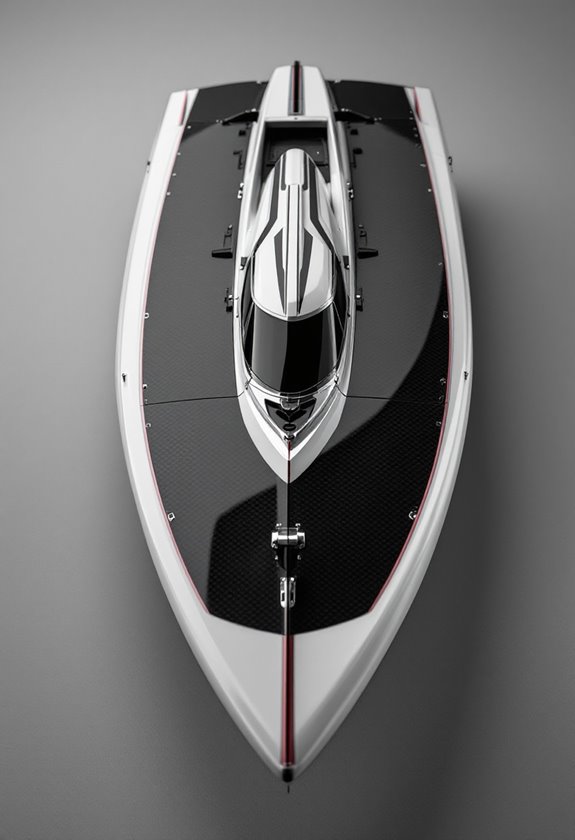
When it comes to achieving an exhilarating experience on the water, the significance of proper boat setup cannot be overstated. A well-balanced boat enhances stability, especially at high speeds. Key factors include:
- Engine Alignment: Guarantee solid engine mounts and proper propulsion setup to minimize movement. This boosts steering precision, reducing the risk of chine walk.
- Boat Balance: Distributing weight evenly across the vessel is essential. Overloading or improper placement of equipment can lead to instability. Consider adjusting battery and fuel tank locations to fine-tune balance.
- Trim Adjustments: Utilizing trim tabs can dynamically stabilize the boat’s hull, countering potential oscillations.
Additionally, incorporating features such as high-quality ABS plastic in the build can enhance overall resilience and performance.
In short, a meticulous approach to setup transforms potential chaos into smooth sailing, combining safety with performance.
Recommended Products

Zipwake is a fully automatic and active trim control system
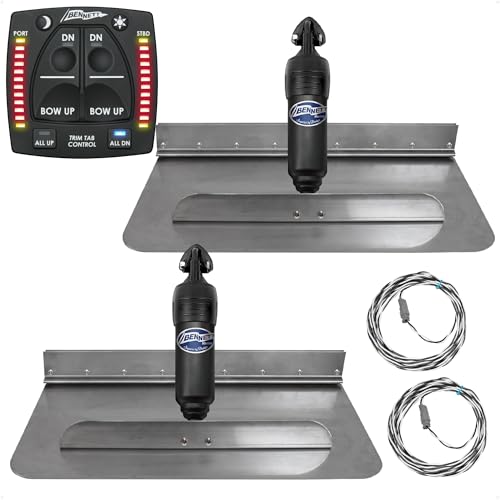
BOLT ELECTRIC TRIM TAB SYSTEM BOLT2412 – Trim tabs for boats include a Bolt rocker switch control, two actuators with 6 ft wire harnesses and waterproof connectors, and two stainless steel trim tabs with mounting plates 24" x 12"

Get on plane fast and stay on plane at intermediate speeds
Effective Driving Techniques
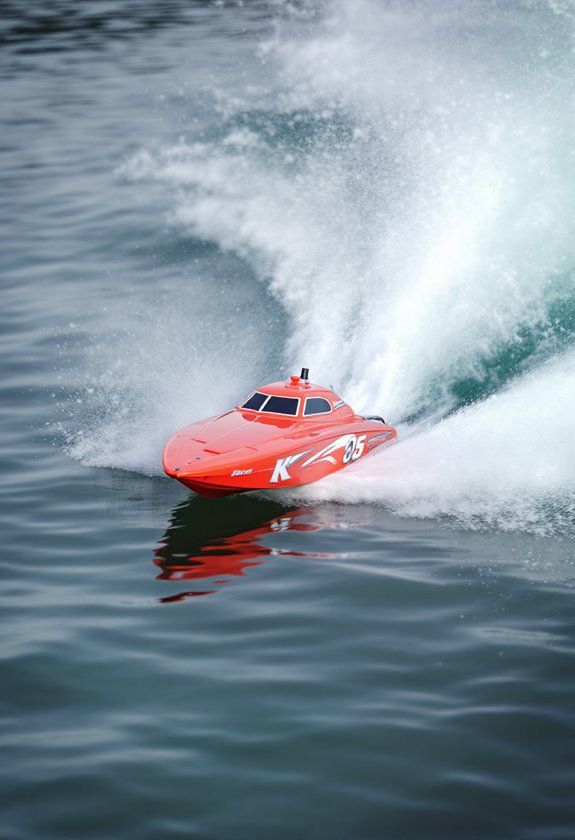
Achieving a smooth and controlled ride on the water requires not just a well-set boat but also refined driving techniques. To maintain stability at high speeds, drivers should prioritize throttle management, making gradual adjustments instead of abrupt cuts. Small throttle reductions combined with a slight downward trim can help alleviate the dreaded chine walk.
Key techniques include:
- Steering Sensitivity: Use small, purposeful corrections for steering—think of it as guiding a dance partner, not wrestling with them.
- Weight Distribution: Properly balance load to minimize instability; avoid making your boat feel like a see-saw!
- Feedback Adjustments: Stay tuned to the boat’s behavior; quick, responsive adjustments are essential for maintaining control.
In addition, understanding the self-righting features of modern RC boats can help you choose a model that provides more stability at high speeds. These techniques transform a wild ride into a smooth glide.
Recommended Products

Impact Resistant Polycarbonate Hull


Traxxas 103076-4-GRN - Spartan 36in Self Righting Brushless Boat RTR, Green
Recognizing Early Signs of Chine Walk

Understanding the early signs of chine walk is essential for any boat driver aiming to maintain control and safety on the water. Recognizing slight hull oscillations is key; these modest side-to-side movements can grow unchecked at high speeds. Drivers may feel the initial instability during straight-line runs, even in calm water.
Early Indicators to Watch For:
- Minor Rocking: Unusual lateral rocking may emerge, signaling trouble.
- Weight Distribution Issues: Improper setup can heighten sensitivity, making it harder to maintain stability.
- Vibrations: Any knocking noises along the hull should raise alarms. Additionally, cooling systems are crucial in preventing overheating, which can exacerbate handling issues during high-speed operation.
Corrective Actions to Regain Control
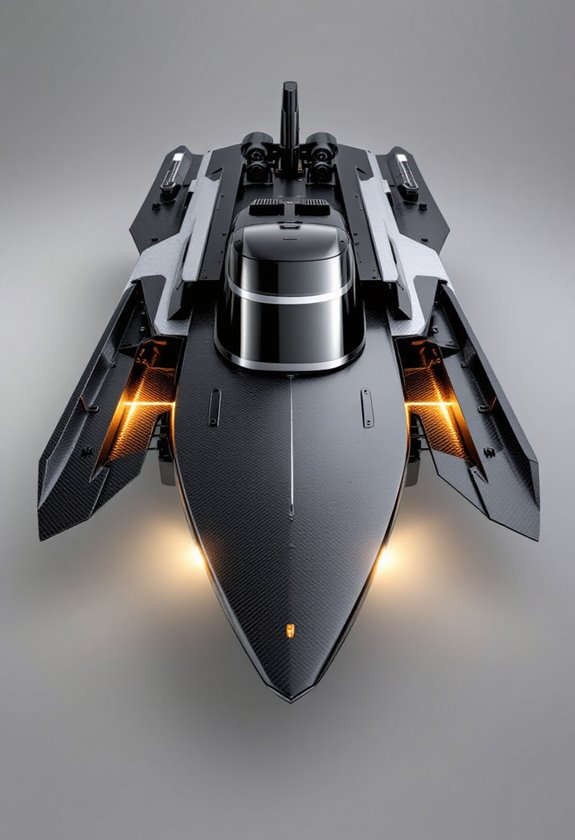
Corrective actions to regain control during a chine walk situation hinge on precise and timely interventions. To counterbalance the hull, timely steering adjustments should be made in the opposite direction of the bow’s lateral movement. Small, consistent corrections keep the boat stable, while oversteering can worsen instability.
Maintaining weight balance is vital; evenly distributed weight minimizes rocking. Adjust ballast or reposition gear and passengers to guarantee an ideal center of gravity.
Drivers should be aware of the hull’s behavior. A relaxed posture fosters better control, while smooth throttle modulation prevents sudden speed changes. Familiarity with the boat’s response at varying speeds enhances correction timing, keeping the vessel on course and avoiding the precarious dance of chine walk. Additionally, understanding the importance of battery life can further improve overall performance and help manage speed during high-speed maneuvers.
Recommended Products

TOP-PERFORMING ANCHOR— Our anchors have a one-piece design and the highest holding power per pound, certified by Lloyd’s Test Certification. The low profile allows the anchor to set immediately when dropped in for consistent and reliable perform

FATSAC Yamaha Jet Boat Custom 24 - 800 Pound Ballast Bag - Grey [C1039]

Super Strong Suction Cup Attachment
Hull Design Factors at Play
When managing chine walk, the design of the boat’s hull plays an influential role in stability and control. Key factors include:
- Hull Design: Deep Vee hulls might offer speed but are prone to chine walking, especially with reduced wetted surface area.
- Chine Configuration: Hard chines enhance sharp handling but can be tricky; improper design can lead to instability. Conversely, soft chines provide comfort, though at a performance cost.
- Weight Distribution: Balanced weight distribution is essential. Placing heavy gear near the center of gravity minimizes hull instability, while dynamic shifts can trigger chine walk.
- Surface Area: Reducing surface area can lead to a wobbly ride. Maintaining consistent contact with water is imperative to avoid those unwanted side-to-side motions. Additionally, having a well-designed hull contributes to enhanced stability during high-speed maneuvers.
A well-designed hull is a boat’s best friend!
Recommended Products


Will not roll up like traditional round fenders

160mm Height Aluminum Rudder Blade with Dual Pickup for 26cc RC Boat
Safety Measures for High-Speed Boating
High-speed boating can be an exhilarating experience, but safety must always remain at the forefront. To enhance safety, boat operators should prioritize the following measures:
- Wear Safety Equipment: Guarantee all passengers wear life jackets. Statistics reveal that 87% of drowning victims in boating disasters were not equipped with them.
- Mind Speed: Adhere to recommended speed limits, especially in choppy waters, to maintain stability and avoid accidents linked with excessive speed.
- Utilize Technology: Install safety equipment, such as accelerometers and trim tabs, aiding in hull control and detecting slamming impacts.
- Know Emergency Procedures: Operators should be trained in emergency protocols, guaranteeing prompt and effective responses during incidents.
Skill Development for Better Handling
Perfecting the skills needed for better handling while boating is a journey every aspiring captain should embrace. This development begins with practice in controlled turns—smooth, precise movements that avoid sliding or excessive roll. Incorporate drills like Follow the Leader or Williamson Turn at speed, enhancing deliberate turn control.
Key Techniques:
- Throttle Management: Start slow, gradually increase throttle for muscle memory.
- Steady Inputs: Maintain consistent turn radius; oversteering can lead to trouble.
- Variety in Drills: Use figure-eights and 45-degree turns to build responsiveness.
Maintaining Your Boat for Optimal Performance
Maintaining a boat for ideal performance is essential to guarantee not only an enjoyable experience but also the safety of its occupants. Key practices include:
- Regular Engine Diagnostics: Monitoring temperature, RPM, and oil pressure can reveal early signs of malfunction that may lead to chine walk.
- Performance Tuning: Adjusting trim and ballast distribution optimizes speed and stability, minimizing risks at high speeds.
- Preventive Maintenance: Scheduling oil changes based on performance trends guarantees engine efficiency, while condition-based checks on propellers avoid unstable thrust.
- Real-Time Monitoring: Using tools to analyze data helps in making immediate adjustments, enhancing control.
Incorporating these strategies guarantees smooth sailing, transforming potential chaos on the water into a reassuringly stable experience. Happy boating!
Recommended Products

BRP MPI-3 Interface (main unit, is used for diagnosis of all BRP vehicles),

Advanced Evinrude G2 Diagnostics – Easily perform professional-level diagnostics, tests, and parameter updates on all Evinrude G2 outboard engines using genuine EvDiag v.6 software.

COMPREHENSIVE YAMAHA MARINE DIAGNOSTICS - Designed for supported Yamaha WaveRunner PWC and Yamaha outboard engine models from 2003–2024, the ANCEL MR500 helps boat owners and marine technicians read and clear fault codes, view live engine data, check ECU and EMM information, and perform supported service functions through a 5.0-inch touchscreen
Frequently Asked Questions
What Speed Typically Triggers Chine Walk in High-Performance Boats?
Chine walk thresholds in high-performance boats typically emerge at speed capabilities around 60 to 70 mph. Exact onset speeds vary by hull design, weight distribution, and driver experience, impacting overall stability in those critical ranges.
Can Chine Walk Damage the Boat Over Time?
Like a wild stallion, chine walk can wreak havoc on a boat, causing gradual structural fatigue. Adequate boat maintenance is essential; ignoring signs may lead to accelerated wear and potential catastrophic failures over time.
How Does Weight Distribution Affect Chine Walking?
Weight distribution greatly influences chine walking, as improper weight balance disrupts handling characteristics. Centralized loads enhance stability, while uneven distribution can exacerbate dynamic instability, increasing the likelihood of chine walk during high-speed operation.
Are There Specific Brands or Models Less Prone to Chine Walk?
Certain brands, like Ranger and Nitro, renowned for exceptional boat stability, exhibit hull designs that mitigate chin-walk tendencies. These models, with carefully crafted shapes, sail through waters with reduced risk of turbulent challenges at high speeds.
What Role Does Water Temperature Play in Chine Walk Dynamics?
Water temperature greatly influences chine walk dynamics; lower water density and thermal effects may increase drag and disrupt hull balance, while warmer temperatures enhance lift stability and responsiveness, reducing the likelihood of chine walking.


