As an Amazon Associate, we earn from qualifying purchases. Some links on this site are affiliate links at no extra cost to you. Our recommendations are based on thorough research and editorial judgment.


O-rings And Grease: Maintenance Basics

Properly lubricating O-rings is essential for maximizing seal effectiveness and longevity. This involves choosing the right grease, which should be chemically compatible, have a suitable temperature range, and maintain ideal viscosity. Apply a thin film—think of it like icing on a cupcake—to avoid attracting dirt or causing leaks. Regular inspections for cracks or wear are vital, with a gentle cleaning before reapplying. Master these basics, and you’ll enhance performance and reliability; the details await discovery ahead!
Key Takeaways
- Proper lubrication of O-rings reduces friction, enhancing functionality and extending seal life.
- Choose lubricants compatible with O-ring materials and operating conditions to prevent chemical degradation.
- Apply lubricant as a thin, uniform film; avoid over-lubrication, which can attract contaminants.
- Regularly inspect O-rings for cracks or wear and ensure re-lubrication schedules are maintained.
- Utilize dimension compliance checks to ensure O-rings fit properly and prevent leaks.
Importance of Lubricating O-Rings
You may be interested



Friction Reduction: Just like oil in a car engine, a suitable lubricant greatly reduces friction. For O-rings, effective lubrication enhances functionality by minimizing wear. This not only extends the seal’s life but also prevents leakage. Proper lubrication is essential—lower friction means less heat buildup, preserving O-ring integrity. Additionally, maintaining O-rings in high-speed applications can significantly improve their longevity under rigorous conditions.
Key Benefits:
- Easier Installation: Lubrication reduces insertion force, lowering risks of tearing or pinching.
- Reduced Damage: It mitigates mechanical stress during assembly, preventing leaks from improper seating.
- Enhanced Performance: Regular lubrication increases sealing effectiveness and decreases contamination risks.
Maintaining an appropriate lubrication frequency is vital; it’s the difference between a seal that works like a charm and one that fails catastrophically. Grease isn’t just an option—it’s a necessity for durable performance.
Choosing the Right Lubricant

Selecting the right lubricant for O-rings can feel like searching for the perfect key to an intricate lock—one wrong choice can lead to frustrating leaks or costly breakdowns. Key factors in lubricant selection include:
- Chemical Compatibility: The lubricant must match O-ring materials and system media. An incompatible choice can degrade the ring, causing cracks or swelling.
- Temperature Performance: Lubricants should thrive across a wide temperature range. Too thick in cold, too thin in heat—both can hinder O-ring functionality.
- Viscosity: The right viscosity balances staying in place without causing leaks.
- Regulatory Compliance: For food or pharmaceuticals, NSF or FDA approvals are essential.
Choosing based on these lubricant properties guarantees a reliable seal, prolonging equipment life and preventing unexpected failures. Additionally, understanding the importance of high-speed motors can further enhance performance in related applications.
Proper Application Techniques

How can one guarantee that O-rings perform effectively in their intended applications? Proper application techniques are essential for guaranteeing ideal seal performance.
1. Surface Cleanliness: Verify O-rings and mating surfaces are free of debris. This prevents contamination and potential damage.
2. Lubricant Application: Apply a thin, uniform film using methods such as:
- Dipping in lubricant for complete coverage.
- Using a gloved hand or brush for precision.
- The “shake and bake” technique for batch coatings.
3. Lubricant Types: Select the correct lubricant that matches the O-ring material, avoiding over-lubrication—just a visible sheen suffices.
4. Installation Checks: After lubrication, confirm proper O-ring orientation to prevent assembly mishaps. By following these guidelines, the seal’s effectiveness can be greatly improved. Additionally, maintaining the durability of materials used for O-rings is crucial to their overall performance and longevity.
Recommended Products

EXTENDS LIFE OF O-RINGS -Conditions & Seals O-Rings, Gaskets, Seals, Pressure Plugs & Valves, Water & Faucet Valves, Weather Stripping, and Pool Pumps & Filters to extend the product life
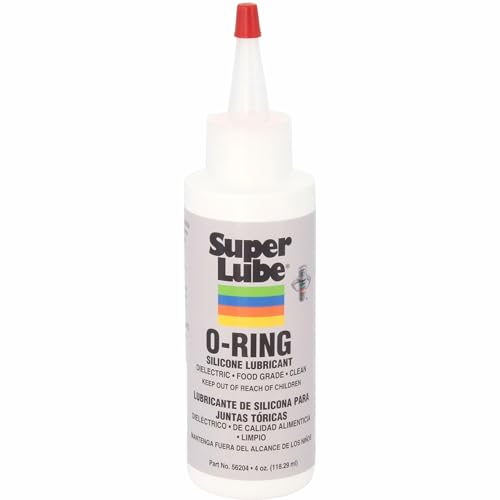
Premium O-Ring Grease: Super Lube O-Ring Silicone Lubricant delivers superior moisture-resistant grease for long-lasting rubber seal care

NSF Approved:Food grade silicone grease,odorless and colorless,no chemical contamination to drinking water.Retains its consistency in temperatures from -40° to 400° f,no pigment for clean use
Effects of Over- and Under-Lubrication

Understanding the effects of over- and under-lubrication on O-rings is vital, especially since these small components play a significant role in maintaining the integrity of countless systems.
Over Lubrication Risks:
- Excess grease can attract dirt, leading to seal leakage.
- It may cause slippage, reducing the friction needed for a proper seal.
Under Lubrication Consequences:
- Insufficient lubrication increases friction, accelerating wear and risking seal failure.
- A lack of lubricant can lead to improper seating, which causes leaks.
Striking the right balance is essential—think of lubrication as Goldilocks; too much or too little can spoil the performance. Achieving ideal lubrication not only enhances the durability of O-rings but also maintains their essential sealing capabilities. Moreover, RC fishing boats often rely on well-lubricated components to ensure smooth operation during aquatic adventures.
Maintenance and Reapplication

When aiming to keep O-rings in prime condition, regular maintenance and reapplication of lubricant stand out as indispensable practices. The maintenance frequency should be determined by the environment—more frequent in harsher conditions. Key reapplication strategies include the following:
- Routine Inspections: Check for brittleness, cracking, or tearing.
- Cleaning: Use warm water and compatible agents—this helps remove contaminants.
- Lubrication: Apply a thin, uniform coat of compatible lubricant before installation.
Avoid heavy lubrication—too much grease can attract dirt and damage seals. Utilizing methods like brushing can guarantee even distribution, akin to icing a cake, but with less gooeyness. Remember, proper maintenance prevents leaks and prolongs O-ring life, making the effort worthwhile! Additionally, using high-grade materials enhances the durability of O-rings against wear and tear in harsh conditions.
Benefits of Using Silicone Grease
The benefits of using silicone grease for O-rings extend well beyond simple lubrication; they fundamentally enhance performance, reliability, and longevity.
- Reduced Friction: This grease minimizes wear, ensuring O-rings last longer and seal better.
- Temperature Stability: It withstands extreme heat and cold, providing reliable protection in harsh environments.
- Water Resistance: Silicone grease creates a waterproof barrier, preventing moisture damage and enhancing corrosion resistance.
With these advantages, silicone grease applications shine, particularly in plumbing and underwater equipment. The environmental benefits are significant too, as this formula protects against degradation, promoting sustainability. Furthermore, by using silicone grease, users can enjoy smoother assembly processes and improved equipment longevity, making it an essential choice for any maintenance toolkit. The use of waterproof hulls ensures prolonged functionality in dynamic conditions, similar to features found in fast RC boats.
Recommended Products
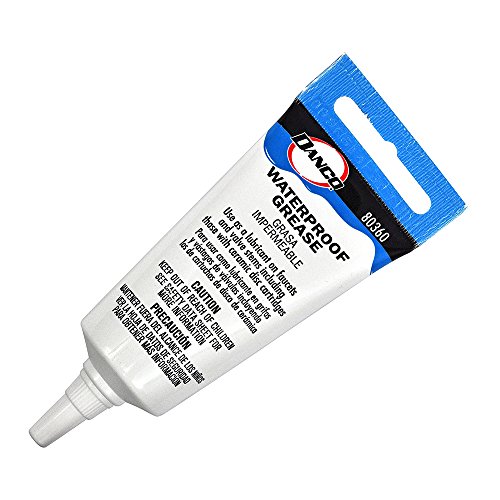
PLUMBERS FAUCET AND VALVE GREASE: Ideal for lubricating faucet stems valves and cartridges when repairing a leaky faucet

Ultra-Smooth & Penetrating Formula – Non-Drip, Yet Flows Where Needed This food grade silicone grease features a unique gel-like consistency that glides effortlessly into tight spaces, making it the ideal silicone grease for o rings and hard-to-reach electrical connectors. Unlike thick pastes, it offers excellent penetration to lubricate and protect components without disassembly, yet it remains non-drip on vertical surfaces – so you get the best of both worlds: penetration without messy runoff.
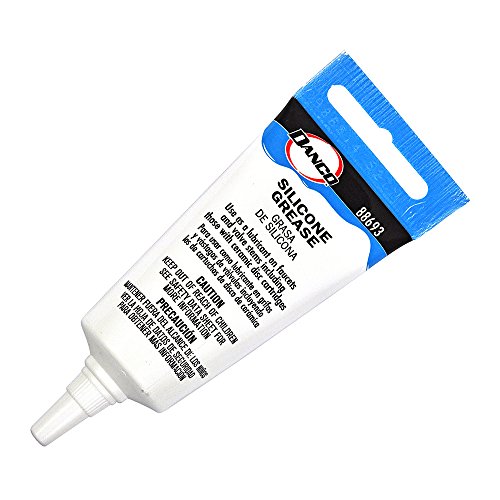
PLUMBERS FAUCET AND VALVE GREASE Ideal for lubricating faucet stems valves and cartridges when repairing a leaky faucet
Chemical Compatibility Considerations
Chemical compatibility plays a crucial role in maintaining the integrity and performance of O-rings when they interact with various lubricants and fluids. Incompatible pairings can lead to unwelcome consequences—think swelling, hardening, or even cracking. Elevated temperatures heighten these chemical reactivity impacts, so caution is key.
Recommended Products

Watch Gasket Application: Specifically designed for use with watch gaskets to ensure proper sealing and protection

Multi-Purpose Silicone Lubricant Grease – Perfect for use in tons of applications such as o-rings/gaskets, plumbing/faucets, pool/spa, food service equipment, automotive, marine, scuba, valves, pumps, drinking water systems, whole house water filters, aquariums, and more.

Superior Lubrication Performance: Super Lube Silicone Lubricating Grease with Syncolon reduces friction and wear while providing long-lasting lubrication for industrial and automotive applications
Key Considerations:
- Material Selection Guidelines: Different materials have unique compatibility profiles. For instance, Viton® excels with hydrocarbons, whereas EPDM falters with petroleum-based oils.
- Grease Type Matters: The nature of the grease—be it silicone-based or lithium-based—can drastically change how O-rings behave.
A meticulous approach to pairing materials guarantees seals operate effectively, extending service life and reliability in various environments. Testing under actual conditions is essential for peak performance.
Common Lubrication Mistakes to Avoid
Avoiding common lubrication mistakes is essential for prolonging the life and effectiveness of O-rings in various applications. Misunderstandings often surround lubrication frequency and application:
- Inadequate Lubrication: Insufficient application can lead to increased friction, causing rapid O-ring wear.
- Incorrect Lubricant Type: Using incompatible lubricants can degrade materials.
- Improper Application: Uneven distribution may create hot spots, leading to wear.
- Failure to Reapply: Neglecting routine re-lubrication accelerates damage—like skipping breakfast, it’s a bad idea!
- Contaminant Trapping: Some lubricants attract dirt, creating abrasive wear.
Common myths claim that “more is better”—however, over-lubricating can attract contaminants. Understanding these pitfalls is key to ensuring O-ring longevity and efficiency, making maintenance smoother and more effective!
Tips for Inspecting O-Ring Integrity
- Cracks, cuts, and nicks
- Discoloration indicating chemical degradation
- Contaminations and molding defects
Utilizing magnification tools (2x to 4x) can reveal surface imperfections that are otherwise missed. Adhering to industry standards like ISO 3601-3 guarantees a thorough evaluation, especially for materials like silicone, known for brittleness.
Also, checking dimensions with calipers guarantees compliance with specifications. Regular monitoring and careful attention—even a quick visual check—can extend the life of O-rings and prevent costly failures down the line.
Enhancing Performance With Specialized Treatments
Enhancing the performance of O-rings is not just about selecting the right material; it’s a nuanced dance involving several specialized treatments that can greatly elevate their functionality. Specialized formulations, including proprietary lubricants like Precix, considerably reduce friction during assembly, which improves seal insertion efficiency—think of it as a friendly push helping the O-ring slide into place.
Moreover, advanced seal designs, like quad rings, boast multi-lobed cross-sections, doubling the sealing surface area. These unique shapes trap lubricants effectively, ensuring continuous lubrication, especially during dynamic applications.
Lastly, rubber coatings reduce surface wear and improve chemical resistance—vital for O-rings facing corrosive environments. Together, these treatments create a symphony of enhanced durability and performance, extending the life of O-rings in diverse settings.
Recommended Products

Durable Construction: These O-rings are made from high-quality rubber, ensuring long-lasting performance and resistance to wear and tear.maintain stable performance

36 SIZE:Assort rubber o ring kits ID x CS size: 3x1mm, 4x1mm, 4.5x2mm, 5x2mm, 6x2mm, 6x2.5mm, 6x3mm, 7x2mm, 8x2mm, 9x2mm, 10x2mm, 12x3mm, 13x3mm, 14x2.5mm, 17x2.5mm, 18x4mm, 20x2mm, 22x2mm, 7/32x1/16, 1/4x1/16, 17/64x5/64, 5/16x5/64, 5/16x1/16, 5/16x5/64, 11/32x5/64, 7/16x1/16, 7/16x3/32, 7/16x5/64, 15/32x5/64, 35/64x5/64, 9/16x3/32, 35/64x5/64, 19/32x5/64, 43/64x5/64, 11/16x1/16, 11/16x1/8

Package Including: O ring kit contains 1050 PCS in 21 sizes, a wide range of sizes and quantities will meet your needs
Frequently Asked Questions
How Often Should O-Rings Be Inspected for Wear?
O-rings should be inspected monthly for general applications to improve longevity. For critical scenarios, employing rigorous inspection techniques weekly or biweekly guarantees early detection of wear, thereby preventing potential equipment failures and costly downtime.
Can Silicone Grease Degrade Under Certain Conditions?
Silicone grease, akin to a diva at a temperature gala, can indeed degrade under environmental factors. High heat, moisture, and contaminants taint its pristine properties, turning once vibrant performance into a sad, crackled caricature of itself.
What Are the Signs of an Over-Lubricated O-Ring?
Signs of an over-lubricated O-ring include O-ring swelling, surface flaking, grease accumulation, and visible leakage. Different lubrication types can exacerbate these issues, leading to diminished sealing effectiveness and increased risk of mechanical failure.
Are There Specific O-Ring Materials That Require Special Lubricants?
Certain O-ring materials indeed necessitate special lubricants. Fluoropolymer lubricants are critical for fluorocarbon elastomers, while nitrile compatibility with petroleum-based or synthetic lubricants guarantees peak performance and prevents degradation across various applications.
How Does Temperature Affect O-Ring Lubrication Effectiveness?
Temperature extremes greatly impact lubrication viscosity, either thinning lubricants at high temperatures or thickening them at low temperatures. This variation affects O-ring performance, highlighting the importance of selecting appropriate lubricants for specific operational temperature ranges.


