As an Amazon Associate, we earn from qualifying purchases. Some links on this site are affiliate links at no extra cost to you. Our recommendations are based on thorough research and editorial judgment.


Hull Polishing for Less Drag

Hull polishing plays a crucial role in minimizing drag on marine vessels. A smooth, fair hull reduces turbulence, which means less fuel consumption and enhanced speed. Using progressively finer grits, like starting with 400 and finishing at 1200, helps maintain ideal water flow. Coatings, such as FDR-SPC, complement polishing by offering antifouling and drag reduction benefits. Together, these strategies can yield notable improvements—like an 11.7% fuel savings. Curious about the best practices to maximize these benefits?
Key Takeaways
- Polishing a hull to a fine grit (1200-1500) helps preserve laminar flow, reducing drag at lower speeds.
- Regular maintenance and polishing keep the hull smooth, minimizing surface irregularities that lead to increased drag.
- Using a controlled progression of grits improves the surface quality, enhancing flow dynamics and lowering drag coefficients.
- FDR-SPC coatings combine drag reduction and antifouling properties, significantly enhancing overall hull performance.
- Real-world applications show polished, coated hulls can achieve an 11.7% fuel savings due to reduced drag.
Understanding Drag Reduction Mechanisms
When vessels glide through water, they face a formidable opponent: drag. Understanding drag reduction mechanisms is essential for optimizing vessel performance. Here are key methods that demonstrate polymer application and structural optimization:
- Smoother Surfaces: Reducing turbulence at the hull’s surface decreases drag markedly.
- Polymer Use: High-molecular-weight polymers, when mixed in water, can reduce skin friction drag by up to 80%. Embedded polymers in coatings like PEGMA release gradually to maintain efficiency.
- Controlled Textures: Microstructuring surfaces enhance flow, reducing boundary layer turbulence.
Innovative coatings, such as self-polishing copolymers, combine antifouling properties and drag reduction, potentially enhancing overall vessel efficiency. By strategically applying these techniques, ships can navigate more smoothly, making drag a lesser adversary. Additionally, premium models like the RC speed boats feature optimized hull designs that further minimize drag for improved performance on the water.
Importance of Hull Fairness
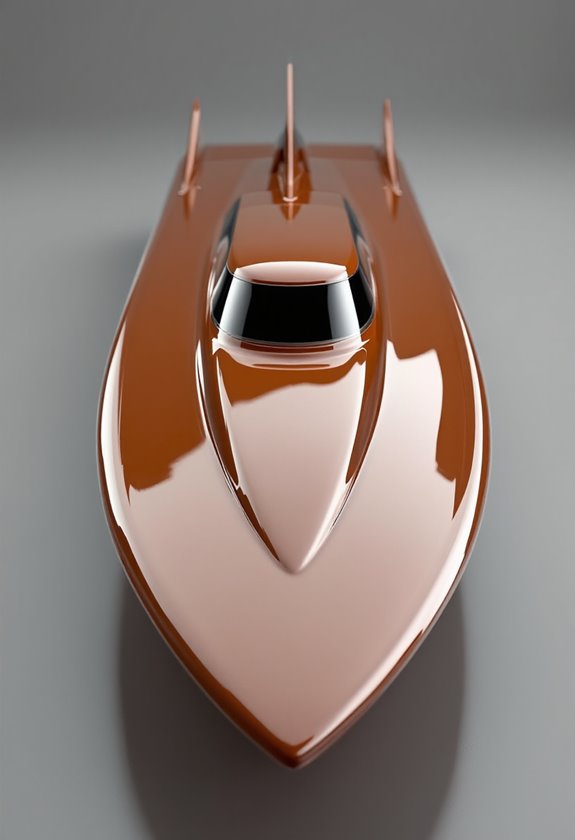
Hull fairness can make the difference between a sluggish vessel and a swift predator of the seas. A smooth, fair hull minimizes dents and bumps that disrupt water flow, allowing vessels to maintain laminar flow longer—crucial for reducing skin friction drag. This enhances hull aesthetics while directly influencing hydrodynamic efficiency.
Key Effects of Hull Fairness:
- Early Shift: Fairness delays the change from laminar to turbulent flow.
- Reduced Drag: Diminished surface irregularities lead to lower drag coefficients.
- Performance Boost: Enhanced speed efficiency in light air translates to fuel savings. Additionally, maintaining a fair hull is essential for maximizing speed performance during water racing events.
Investing in surface treatments maintains hull integrity, ensuring proactive maintenance prolongs operational performance and minimizes cost. Achieving fairness isn’t just practical; it’s essential for any serious mariner.
Polishing Grit and Its Effects on Performance

Polishing grit plays a critical role in the performance of a vessel, acting like the finely tuned engine of an athlete. Different polishing techniques determine how smooth the hull will be, directly impacting drag.
- 400 Grit: Adequate for typical cruising speeds, reducing turbulent flow drag.
- 1200-1500 Grit: Ideal for preserving laminar flow at low speeds, leading to significant speed benefits.
- 2000 Grit: Produces a mirror finish but offers minimal gains—akin to polishing silverware for a fancy dinner.
Grit progression is fundamental; starting rough and working finer gradually enhances surface quality. However, excessive polishing can harm delicate materials like carbon fiber. For vessels chasing peak performance, understanding this balance between grit levels and hull functionality is key. A well-polished hull significantly reduces drag, enhancing the boat’s overall high-speed capabilities.
Recommended Products

Advanced electronics include soft start and electronic speed control

MARINE BOTTOM PAINT FOR MULTI-SEASON PROTECTION IN HIGH FOULING CONDITIONS: High copper content (38% cuprous oxide) for maximum antifouling protection against barnacles & slime for sailboats & power boats in fresh, salt and brackish waters

FINE FINISHING: Helps remove oxidation, scuff marks, blemishes, and P1000 grade and finer scratches on gelcoats for a fine finish
Benefits of FDR-SPC Coatings
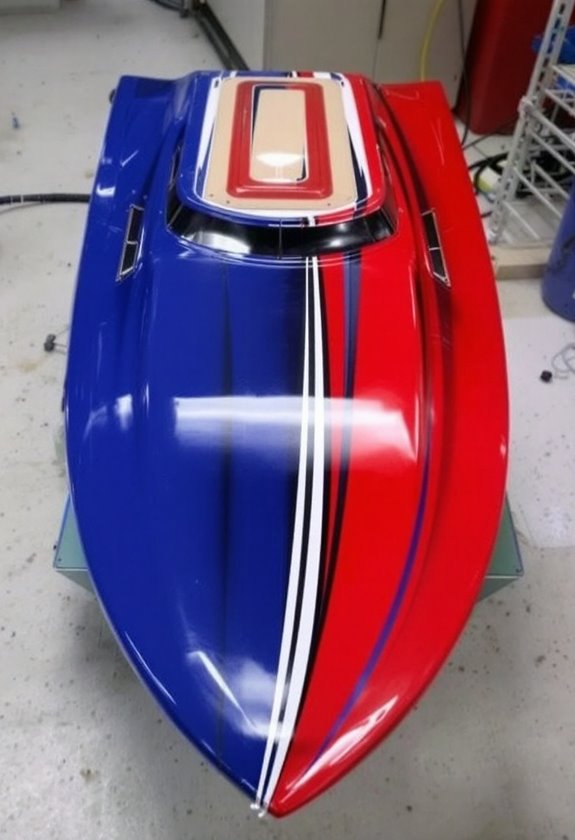
Moreover, their coating longevity guarantees stable performance over six months, thanks to a controlled release of friction-reducing agents. This unique feature minimizes maintenance needs and downtime, making FDR-SPC coatings not just a smart choice but a financially savvy one. Ultimately, these coatings amalgamate drag reduction with antifouling—an essential win for modern maritime operations. Additionally, these coatings can enhance performance during races on calm freshwater environments that are ideal for RC speed boats.
Recommended Products

Bright red, race‑ready finish that stands out while delivering high performance protection for your hull.

MARINE BOTTOM PAINT FOR MULTI-SEASON PROTECTION IN HIGH FOULING CONDITIONS: High copper content (38% cuprous oxide) for maximum antifouling protection against barnacles & slime for sailboats & power boats in fresh, salt and brackish waters

ANTIFOULING PAINT FOR BOATS: Unique hybrid paint film keeps barnacles, weeds and slime from clinging to the bottom of your power boat or sailboat for a full season; ideal for fiberglass, wood and steel boats in salt water and fresh water
The Role of Superhydrophobic Surfaces

In the quest for reduced drag and increased efficiency in maritime operations, superhydrophobic (SHPo) surfaces have emerged as a game-changer, boasting remarkable benefits. The magic lies in their ability to trap a thin layer of air, known as a plastron, between water and the hull. This ingenious design enables water to glide over air rather than making direct contact with the surface—significantly reducing friction and decreasing skin friction drag by about 30%.
However, achieving plastron stability in turbulent conditions is essential. Re-entrant microstructures play an important role in retaining this air layer, preventing it from being washed away. As boats navigate through choppy waters, the effectiveness of superhydrophobic surfaces can be likened to an air hockey puck effortlessly skimming across the table, illustrating the dramatic reduction in shear stress. Moreover, water-cooled motors optimize efficiency during extended use, complementing the benefits offered by SHPo surfaces in enhancing boat performance.
Recommended Products

High-build, two-component epoxy primer and barrier coat for excellent corrosion prevention on aluminum hulls and pontoon boats. Can be overcoated with bottom paints or other 1- and 2-part paints

<b>Protect and Enhance New Gel Coat or Paint:</b> Our marine ceramic coating adds a nano-ceramic protective layer to the surface of your boat. Protects against corrosion, UV, and harsh chemicals, while also restoring color, gloss and surface hardness.

Durable, High-Gloss Marine-Grade Paint: TotalBoat Wet Edge provides a beautiful, scratch-resistant, chemical-resistant finish with maximum color and gloss retention.
Impact of Fouling on Drag
Types of Fouling play a critical role in increasing drag on ships. Various fouling types cause different levels of frictional resistance. For instance:
- Light slime coatings can produce a 7% to 9% increase in overall drag, while heavy biofouling can elevate it by 15% to 18%.
- Barnacles and mussels can further complicate fouling effects, similar to how sturdy construction and waterproof designs are critical for maintaining durability in RC boats.
Maintenance Strategies for Hull Efficiency
Effective maintenance strategies for hull efficiency are vital to combat the ever-increasing challenges posed by drag. To keep a vessel’s performance at peak levels, operators should implement routine inspections and adhere to robust cleaning schedules. Regular cleaning can remove biofouling and surface roughness, yielding a friction drag reduction of 4-5%.
Moreover, polishing the hull to 400 grit enhances turbulent flow conditions, while a finer polish of 1200-1500 grit can preserve laminar flow, reducing friction even further. This delicate balance is significant; imperfections trigger earlier shift to turbulence, dramatically increasing drag. Finally, scheduled dry docking guarantees coating integrity is maintained—maximize those fuel savings, and keep that hull smooth! After all, an efficient hull makes for a happy captain—and perhaps even a reliable crew!
Recommended Products

USE WHAT THE PROS USE - Refine, polish and wax gelcoat in one step, so you can get back on the water or the road

DEFECT REMOVAL: M10001 Mirror Glaze Pro Speed Compound is the perfect addition to your car cleaning supplies as it removes moderate to heavy paint defects like scratches, oxidation, swirls, acid rain, and even cuts through up to 1200 grit sanding marks

STAGE 4 OF 4 STEP ROCK TUMBLING MEDIA GRIT – Two 1.5 lb. jars of Stage 4 media grit for transforming rocks and gemstones into beautiful treasures. Contains a total of 3 lbs. Final Polish 1200 Fine Aluminum Grit.
Quantifying Fuel Savings From Drag Reduction
- Hull cleaning reduces drag and facilitates smoother surfaces, yielding fuel savings ranging from 7% to 20%.
- Weekly cleanings have demonstrated impressive 12% fuel savings compared to uncleaned vessels.
- Effective coatings can add an additional 4% savings, which means over 10% total fuel economy when factoring overall performance.
In essence, maintaining a clean hull is like giving a vessel a quick energy drink—better efficiency, less drag, and ultimately, significant cost savings. It’s not just about cleanliness; it’s a smart investment in sustainability and savings.
Practical Aspects of Hull Polishing
When it comes to preserving a vessel’s performance and appearance, hull polishing is not just a luxury; it’s an essential practice that has both practical implications and aesthetic rewards.
Polishing Techniques
- Effective hull polishing begins with thorough surface preparation—washing and decontaminating to remove grime is vital.
- Employ specific polishing compounds with lambswool pads on moderate-speed polishers around 2,000 rpm for best results.
Surface Preparation
- For heavily oxidized hulls, start with sanding using progressively finer abrasives, beginning at P1,000 grit.
- Work in small areas (about 2ft x 2ft) to guarantee even application.
Recommended Products

53 Gallon drum of NOVUS #2 Fine Scratch Remover

Bioesque Botanical Disinfectant Solution, Heavy Duty Broad-Spectrum Disinfectant, Kills 99.9% of Bacteria, Viruses*, Fungi, & Molds

Delivers superior cleaning, degreasing, and deodorizing power
Combining Coatings and Polishing for Optimal Results
Combining coatings and polishing represents a game-changing strategy for vessel maintenance, enabling significant reductions in drag while enhancing overall performance. This innovative approach harnesses coating synergy, especially with self-polishing copolymers that release polyethylene glycol to minimize friction.
- Enhanced Performance: Lab tests show these coatings can reduce skin friction by 25%.
- Polishing Techniques: Smooth hull surfaces promote laminar flow, reducing turbulence and further lowering drag.
Real-world applications reveal a 3.72% speed increase and an impressive 11.7% fuel savings—proof that polished, coated hulls are the ultimate dream team. By aligning hull maintenance with coating application schedules, vessels can experience consistently improved efficiency—making regular upkeep not just smart, but essential for peak performance on the water.
Frequently Asked Questions
How Does Temperature Affect Hull Polishing Results?
Temperature affects hull polishing results by influencing polishing techniques and surface properties. Higher temperatures can enhance smoothness through increased water absorption while also accelerating degradation, and thereby impacting the overall effectiveness and longevity of polishing outcomes.
Can Hull Polishing Be Done With the Vessel in Water?
Hull polishing while the vessel is in water is challenging and generally impractical. Hull maintenance techniques may involve limited underwater polishing methods, but effectiveness diminishes due to water interference, necessitating haul-out for best results.
What Are the Environmental Impacts of Hull Coatings?
Environmental impacts of hull coatings notably include harmful chemical contamination and adverse effects on marine life. Eco-friendly coatings offer sustainable solutions, reducing toxicity, preserving biodiversity, and protecting fragile ecosystems from pollution resulting from traditional coatings.
How Often Should Hull Polishing Be Done?
Hull polishing should be performed according to frequency recommendations based on environmental conditions and usage. Maintenance schedules suggest polishing 1-2 times annually, or every 3-6 months for boats in harsher environments. Regular inspections guide timing decisions.
Are There Specific Products Recommended for Hull Polishing?
Recommended hull polishers include Podium Finish and McLube products, emphasizing effective surface preparation. These polishes enhance appearance, protect against oxidation, and facilitate smoother finishes, contributing to better overall maintenance and aesthetics of marine vessels.