As an Amazon Associate, we earn from qualifying purchases. Some links on this site are affiliate links at no extra cost to you. Our recommendations are based on thorough research and editorial judgment.

How to Reduce Drag on RC Speed Boats

Reducing drag on RC speed boats involves several key strategies. Start with a streamlined hull design—think sleek, V-shaped or planing hulls—to slice through water effortlessly. Superhydrophobic coatings can repel water, minimizing friction. Optimize your propeller by choosing the right pitch and diameter, ensuring a perfect thrust angle. Regular maintenance is essential; clean props and inspect hulls to prevent debris build-up. Use lightweight materials like carbon fiber for better agility. Discover more ways to enhance performance!
Key Takeaways
- Optimize hull design by selecting shapes like planing hulls that minimize drag and improve speed through efficient water displacement.
- Utilize smooth, superhydrophobic coatings to reduce water adhesion and enhance speed while preventing biofouling on the hull.
- Choose the right propeller, focusing on two-bladed designs for less drag and selecting sizes that enhance thrust without sacrificing acceleration.
- Maintain a proper thrust angle to reduce drag by aligning propulsion forces effectively and avoiding hull immersion.
- Regularly inspect and clean the hull and propeller to prevent debris buildup, ensuring smoother water flow and improving overall performance.
Understanding Hull Drag
Hull drag is the unseen antagonist in the thrilling race of RC speed boats, lurking beneath the surface, ready to slow them down. Understanding hull friction is vital, as it originates from the contact between the hull and water—known as viscous or skin friction drag. Essentially, the larger the wetted surface area, the greater the friction.
Key Factors Influencing Hull Drag****:
- Smooth Surfaces: Polishing and fairing welds minimize turbulent flow.
- Wetted Area: Reducing unnecessary appendages effectively lowers drag.
- Coatings: Superhydrophobic surfaces help the boat slip through water.
Drag analysis reveals the delicate balance between hull design and speed; even minor adjustments in trim or surface texture can yield significant performance gains. Additionally, employing a self-righting mechanism can enhance the boat’s overall resilience against capsizing, which is crucial for maintaining optimal speed. Ultimately, every detail counts in the pursuit of speed!
The Importance of Hull Design

Design plays a pivotal role in the performance of RC speed boats, guiding their journey across the water with precision and efficiency. The choice of hull shapes directly influences both stability and drag impacts.
- V-Hulls glide smoothly but can increase drag due to stability compromises.
- Flat-Bottom Hulls excel in speed, yet may pound against waves, sacrificing ride quality.
- Planing Hulls are champions at reducing drag, lifting off water at speed—think of it as skiing on water!
To master performance, one must balance these elements. Increased stability often means wider hulls, which can lead to more drag. Consequently, a well-designed hull guarantees maximum speed without sacrificing control, striking that oh-so-important equilibrium. Additionally, boats equipped with high-speed brushless motors can further enhance performance by minimizing drag during operation.
Superhydrophobic Coatings for Performance

As the quest for speed and efficiency on the water continues, superhydrophobic coatings have emerged as a promising technology for enhancing the performance of RC speed boats. These coatings boast exceptional hydrophobic characteristics, allowing water to bead rather than adhere, which can help reduce drag. However, caution is needed; improper coating applications can inadvertently increase drag—especially on hydrofoils, where speed could drop by up to 30%. The surface energy of a coating greatly impacts its effectiveness, with low adhesion facilitating quick water shedding. Innovative solutions like Wearlon SpeedCoat-49 offer a competitive edge for racers, minimizing biofouling while improving speed and fuel efficiency. Ultimately, the application of these advanced coatings must be strategic to maximize benefits and avoid potential pitfalls. Additionally, choosing models with high speed capabilities can further leverage the advantages provided by superhydrophobic coatings for better performance.
Surface Treatment Techniques

When it comes to racing RC speed boats, achieving that extra burst of speed can often hinge on surface treatment techniques. Key methods include:
- Mechanical Treatments: Sandblasting clears imperfections, while polishing reduces microscopic roughness, leading to significant drag reduction.
- Texture Optimization: Innovative laser texturing creates micro-patterns that enhance water flow, mimicking nature’s solutions like shark skin.
- Surface Sealing: Epoxy resins safeguard wooden hulls, preventing water damage and maintaining smoothness.
- Coating Applications: Specialized low-friction coatings lower wetted surface friction while providing durability against abrasion.
Additionally, selecting boats made from high-durability materials can further enhance performance by resisting impacts and ensuring stability on the water. Implementing solid maintenance strategies—like regular cleaning—ensures that these treatments perform effectively long-term, preserving performance and maximizing speed on the water. Investing in these surface treatments can transform any RC speed boat into a sleek, hydrodynamic contender.
Recommended Products

【Brushless Watercooled Motor】: Powered by a potent 3554A Brushless Watercooled Motor, with automatic water cooling system, to extend the service life of the ship model.

Brushless RC Racing Boat with Real Water Cooling: Powered by a high-performance brushless motor, this 19" large RC boat reaches speeds up to 40KPH for exciting high-speed action. The advanced real water-cooling system keeps the motor and ESC running cooler for stable performance, smoother acceleration, and longer-lasting durability on lakes, pools & saltwater. NOTICE: MOTOR/PROPELLER ONLY RUNS IN WATER.

40MPH with Smart ESC and Digital Servo-- The maximum speed of this rc boat reaches to 40MPH, absolutely a beast! and for safety, it will only automatically power on when it is in water. There are 5 speed modes for your choice; the full-scale throttle supports a smooth and stepless speed change. This lightweight ESC provides more than enough power but also ensure responsive moving and steering, giving the best experience of boating!
Optimizing Trim and Angle Adjustments
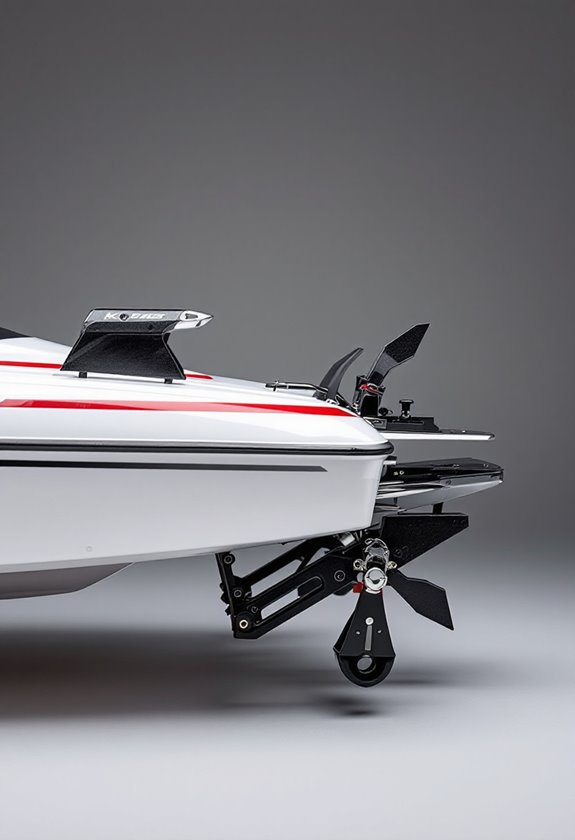
Optimizing trim and angle adjustments plays a pivotal role in maximizing the speed performance of RC speed boats. By carefully adjusting trim, a slight upward angle can lift the bow—reducing hull drag and enhancing top speeds. However, too much lift can lead to instability and cavitation, which is counterproductive.
Key considerations include:
- Fine-tuning: Even fractions of a degree can dramatically alter speed and control.
- Trim tabs: They offer precise control over pitch and roll, correcting any uneven weight distribution.
- Weight distribution: Proper placement impacts the boat’s natural trim angle, influencing total drag.
Incorporating features like waterproof capabilities can ensure your boat remains operational while you experiment with these adjustments. Finding that “sweet spot” of trim optimization and angle adjustments requires patience, experimentation, and a touch of finesse—much like tuning a fine musical instrument!
Propeller Selection for Efficiency
Selecting the right propeller is essential for maximizing the efficiency of an RC speed boat, particularly as the choice greatly impacts both speed and control.
Recommended Products

See the bigger picture: equipped with a Hasselblad l1d-20c camera with a 20MP 1” CMOS sensor, The Mavic 2 lets you capture gorgeous aerial shots in stunning color detail.
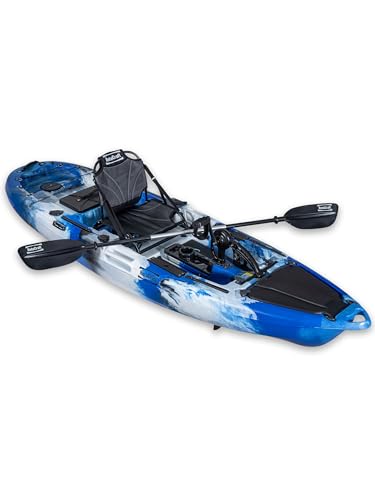
PROPELLER PEDAL DRIVE SYSTEM: The propeller drive provides excellent hands-free speed and maneuverability, along with consistent thrust.

Impact Resistant Polycarbonate Hull
Propeller Blades
- Two-bladed props offer the least drag, favoring top speed.
- Three-bladed options enhance acceleration and provide smoother power delivery.
Pitch Settings
- Higher pitch boosts top speed but may bog down acceleration.
- Low pitch, ideal for heavier models, improves low-speed take-off.
Diameter Considerations
- Larger diameters generate more thrust but can increase drag.
- The best diameter varies: for example, 30-40mm for 2-cell LiPo batteries.
Material Choices
– CNC-machined aluminum or bronze props hold their shape at high speeds, outperforming plastic alternatives.
Propeller Design
– Innovative designs can improve efficiency by up to 7%. Additionally, choosing a propeller that aligns with the speed adjustment knobs can further enhance overall boat performance.
Thrust Angle and Its Impact on Drag
Thrust angle operates as a key player in the performance dynamics of RC speed boats, influencing both speed and efficiency. The thrust angle determines how propulsion force interacts with the hull, with adjustments made both vertically and horizontally.
- Vertical Adjustments: A positive thrust angle lifts the bow, reducing drag, while a negative angle can increase drag by immersing more hull area in water.
- Horizontal Alignment: Correct horizontal thrust alignment minimizes torque-induced drag, keeping the boat on a straight path.
Finding the ideal thrust angle is essential for stability improvements and performance tuning. Too much lift or misalignment could lead to porpoising—definitely not the thrill seekers want! Balancing these factors guarantees reduced drag, enhancing speed while maintaining control on any water condition.
Hydrodynamic Flow Control
Hydrodynamic flow control plays an essential role in the performance of RC speed boats, where even slight adjustments can lead to noticeable differences in speed and efficiency. Effective hydrodynamic modeling is crucial; optimizing hull shapes minimizes turbulent flow, considerably reducing skin friction drag.
- Hull Design: Smooth surfaces and sharper edges lead to streamlined flow, decreasing pressure drag.
- Stabilizers: Vertical and horizontal stabilizers maintain stability and control over water flow, limiting unwanted turbulence.
- Cooling Systems: Efficient water management prevents additional drag while ensuring motors operate at peak temperatures.
Handling Techniques for Stability
Mastering handling techniques is vital for achieving stability in RC speed boats, as even subtle adjustments can greatly influence performance. Effective steering adjustments, such as fine-tuning rudder linkage tension, can eliminate erratic handling and reduce drag. A well-centered rudder enhances directional stability, allowing for smooth cornering.
Weight distribution plays an important role as well. Strategically placing ballast lowers the center of gravity, which minimizes heel during maneuvers—much like how a well-balanced person can walk on a tightrope without tipping over.
Keep in mind that slight upward trim can elevate the bow, reducing hull resistance. However, over-trimming can create instability, leading to hull porpoising. Monitoring these factors during a run guarantees continuous peak performance.
Regular Maintenance Practices
After honing handling techniques for stability, the next important aspect in maximizing the performance of RC speed boats is regular maintenance practices. By performing routine checks, boaters can prevent unnecessary drag from inhibiting speed.
- Hull Inspection: Rinse and scrub to remove debris; inspect for cracks that could spoil hydrodynamics.
- Propeller Maintenance: Keep blades clean and check for chips or bends, guaranteeing smooth rotation and steering.
- Motor Care: Regularly clean connectors, and flush the cooling system to prevent overheating.
- Drive Shaft Lubrication: Apply grease to reduce friction.
- Battery Storage: Store in cool, dry areas to extend life and maintain consistent power.
These steps not only encourage drag reduction but also enhance the boat’s overall lifespan and performance.
Material Choices for Reduced Weight
Additionally, 3D printing offers a unique opportunity to customize hull designs with ideal weight distribution—resulting in a gaming advantage. Lightweight materials play an essential role in enhancing speed and reducing drag. Key options include:
- Plastics: High-quality ABS and PLA are favored for their durability and low weight, while thin, reinforced panels maintain strength without excess mass.
- Composites: Carbon fiber and fiberglass offer remarkable strength-to-weight ratios, contributing to enhanced buoyancy and speed.
- Metal Alloys: Aluminum and titanium provide lightweight alternatives for components, optimizing balance without sacrificing strength.
- Batteries: LiPo batteries boost power-to-weight ratios, ensuring that boats can zip through water efficiently.
These material innovations, coupled with proper design, highlight composite benefits that elevate performance on the water.
Recommended Products

High-Strength Marine Epoxy Resin Kits: System formulated for bonding, coating, and laminating. Build, repair, and restore boats, canoes, kayaks, SUPs, surfboards, RVs, and trailers. Stronger bonds and more durable than polyester fiberglass resin.

APPLICATION SPRAY FOAM: Spray foam insulation is simple to utilize. Before using expanding foam, give the can a good shake to guarantee adequate mixing. Apply the spray foam insulation with ixirpro Spray Foam Gun to the targeted area. Give the foam a full day to cure before cutting or shaping it as desired. Before the foam cures, remove any extra foam by using a solvent or cleaner. Each spray foam insulation can can be used up to incredible 20 board feet.

COMMERCIAL-GRADE SPECS ENGINEERED FOR MARINE USE — Seascape marine vinyl delivers 110,000-cycle abrasion resistance (ASTM D4157), 650-hour UV resistance Class 5.0 (ASTM D4329-13), and cold crack rated to -22°F. Built and tested to outperform generic imports in real marine, automotive, and outdoor environments.
Testing and Fine-tuning Strategies
Key strategies include:
- Adjusting trim angles for ideal bow lift—aim for stability without excessive resistance.
- Experimenting with superhydrophobic coatings to reduce water friction by almost 30%.
- Iteratively refining hull coatings and designs using sensor data to achieve that coveted low-drag configuration.
Recommended Products

If you have a brand-new boat and you want to keep it looking that way – this ceramic coating prep kit is for you!

MARINE BOTTOM PAINT FOR MULTI-SEASON PROTECTION IN HIGH FOULING CONDITIONS: High copper content (38% cuprous oxide) for maximum antifouling protection against barnacles & slime for sailboats & power boats in fresh, salt and brackish waters

High-build, two-component epoxy primer and barrier coat for excellent corrosion prevention on aluminum hulls and pontoon boats. Can be overcoated with bottom paints or other 1- and 2-part paints
Environmental Considerations for Performance
Understanding how environmental factors impact the performance of remote-controlled (RC) speed boats is essential for enthusiasts aiming to maximize their craft’s potential. Various conditions, such as choppy water and temperature, affect drag.
- Water Surface: Calm waters allow ideal trim, reducing drag, while rough waters demand adjustments in throttle and trim tabs for stability.
- Hull Maintenance: Applying hydrophobic coatings and avoiding glossy surfaces enhances glide. Regular cleaning helps maintain low drag.
- Sustainable Practices: Using biodegradable coatings limits environmental impact without sacrificing performance.
Frequently Asked Questions
How Does Water Temperature Affect Drag on RC Speed Boats?
Water temperature dances with drag on RC speed boats, as warmer water lowers viscosity, reducing surface tension and increasing speed. Conversely, cooler temperatures raise density, enhancing drag through increased friction against the hull, subtly affecting performance.
What Role Do Weather Conditions Play in RC Boat Performance?
Weather conditions greatly impact RC boat performance. Variations in wind patterns can alter hydrodynamic drag, while excessive humidity levels may affect battery efficiency and mechanical components, influencing overall speed and stability on the water.
Can Weight Distributed Within the Boat Change Drag Levels?
Weight distributed within the boat can considerably change drag levels. Balance adjustments through weight placement optimize hull contact and stability, influencing overall performance by minimizing resistance and enhancing speed potential during operation.
How Can I Measure the Drag on My RC Speed Boat?
To accurately measure drag on an RC speed boat, one can utilize drag measurement techniques like towing in a controlled environment, combined with speed testing, ensuring data reflects real conditions and minimizing error from external variables.
Are There Specific Colors That Impact Drag on RC Boats?
Color does not impact drag on RC boats, as drag concerns physical surface characteristics. Color psychology and paint types are more relevant for aesthetics and visibility, rather than influencing hydrodynamic performance or drag reduction in practical applications.