As an Amazon Associate, we earn from qualifying purchases. Some links on this site are affiliate links at no extra cost to you. Our recommendations are based on thorough research and editorial judgment.
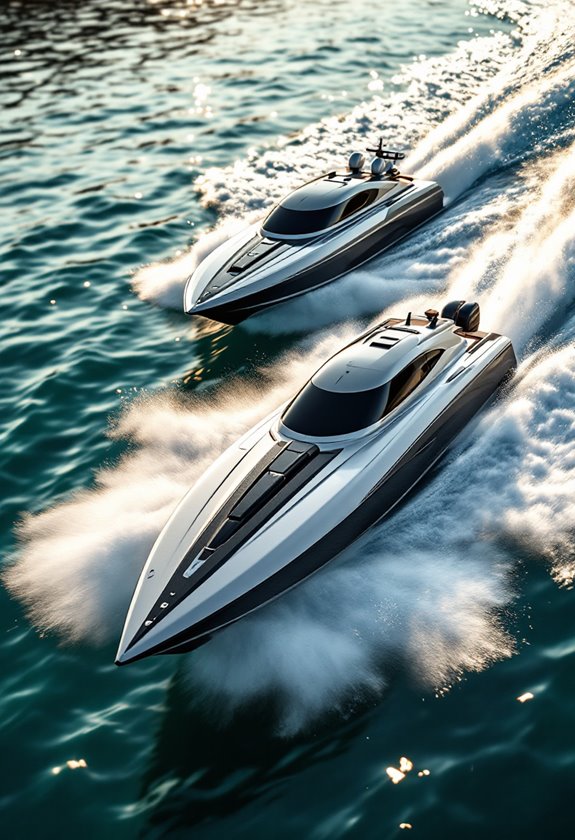
Buyer’s Guide: Ready-to-Sail vs. Kit

When considering a boat purchase, sailors must weigh the pros and cons of ready-to-sail boats versus kit boats. ready-to-sail options, priced from $10,000 to over $200,000, require minimal buyer involvement and feature lower long-term maintenance costs. In contrast, kit boats can start as low as $2,500 but demand significant labor, often resulting in unexpected expenses. These kits provide opportunities for customization but necessitate patience and woodworking skills. Each choice shapes sailing experiences, so it’s essential to evaluate personal preferences and requirements before deciding. Explore further to understand what suits your sailing ambitions best.
Key Takeaways
- Ready-to-sail boats have higher upfront costs but minimize hidden expenses, while kit boats are cheaper but can lead to unexpected additional costs.
- Customization options for kit boats allow significant structural changes and personalized designs, whereas ready-to-sail boats offer limited aesthetic adjustments.
- Ready-to-sail boats require minimal assembly skills and are ideal for beginners, while kit boats necessitate patience and woodworking expertise for successful construction.
- Long-term maintenance costs tend to be lower for ready-to-sail boats, as they often include warranties compared to unpredictable expenses with kit boats.
- Kit builders can access supportive communities and mentorship, but ready-to-sail boats benefit from professional craftsmanship and quality control that ensures safety and durability.
Upfront Costs: Understanding Financial Implications
When contemplating the financial implications of purchasing a boat, the distinction between ready-to-sail and kit options becomes essential. Ready-to-sail boats demand a higher upfront investment, often ranging from $10,000 to over $200,000, but include all necessary components, minimizing hidden costs. In contrast, kit boats can start at a mere $2,500, yet require additional spending that can escalate—up to $300–600 per foot—when factoring in materials and tools.
- Financing Options: Ready-to-sail boats offer conventional loans.
- Kit Financing: More limited options exist with upfront capital or staged payments.
Beware of hidden costs in kit projects; completing certain kits can double initial expenses, transforming perceived savings into unexpected spending traps. Furthermore, the performance metrics of high-speed RC boats may provide insights into what features are essential and the potential costs associated with advanced models.
Customization Options Between Ready-to-Sail and Kit Boats
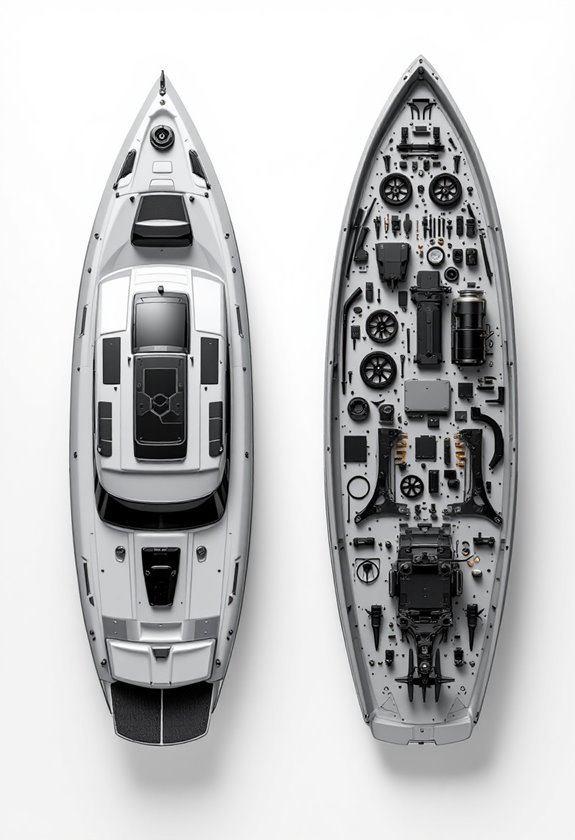
Customization transforms the experience of boat ownership, especially when comparing ready-to-sail boats and kit boats. Ready-to-sail options typically allow for minor customization variations, focusing on aesthetic enhancements like color changes and trim materials. In contrast, kit boats invite a world of personalized possibilities.
- Structural Tweaks: Buyers can adjust hull design and framing.
- Interior Layouts: From seating arrangements to storage solutions, the choices abound.
- Sailing Precision: Kit builders can create custom sails tailored to their sailing style.
These extensive customization opportunities not only enhance functionality but also reflect a builder’s individual taste, marrying form and function like a well-crafted melody. In the end, the choice hinges on how hands-on an owner wishes to be in shaping their maritime canvas. Additionally, many kit boats, such as those from Dumas Products, offer detailed manuals that guide customization, ensuring that builders achieve their desired results.
Recommended Products

Equipped with a saltwater-ready trolling motor, the Old Town Sportsman 106 Powered by Minn Kota motorized kayak offers Minn Kota's low-profile 12-volt motor with 45 pounds of thrust. Motor battery is not included.
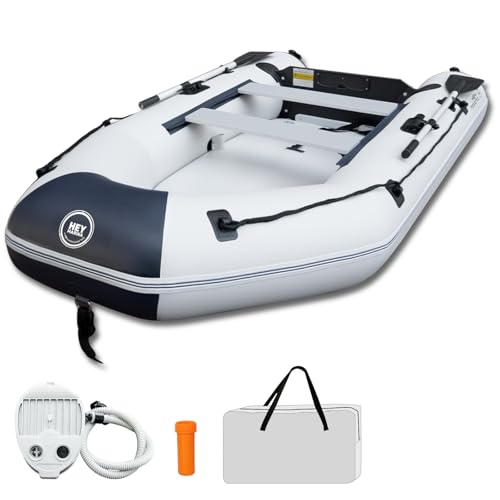
Includes a Valid Hull Identification Number & MCO: Every unit ships with a valid HIN and MCO, a mandatory requirement for legally operating or registering your dinghy. Ensures traceability and adherence to safety standards.

The Assembly Process: Time Requirements and Challenges
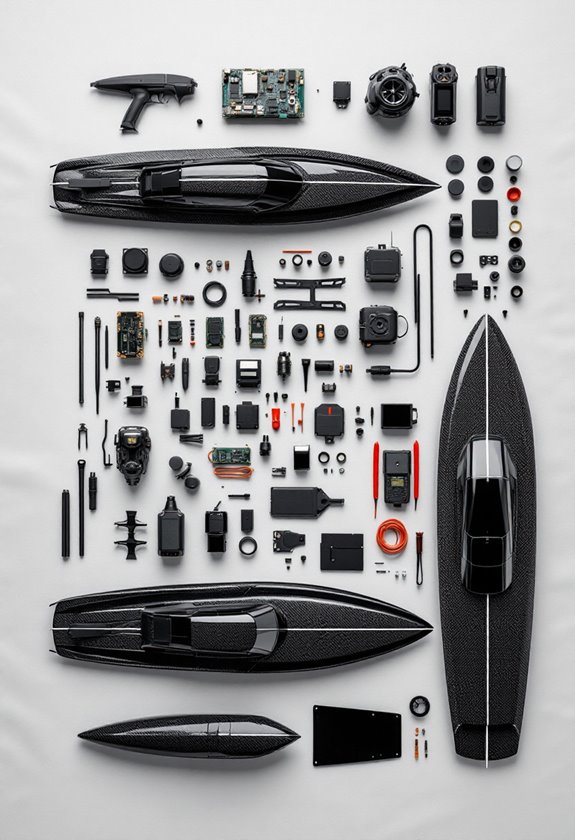
The assembly process for marine vessels often reflects the broader choice between ready-to-sail boats and kit boats. Ready-to-sail options minimize buyer involvement, typically streamlined for quick delivery despite complex internal systems requiring professional installation. For instance, aluminum boats may demand a week just for part fabrication. Conversely, kit boats offer a range of assembly techniques; with wooden crafts potentially taking 100 hours, while inflatable kits like the Tiwal 3 can be ready in 20 minutes—no tools needed!
However, both paths present challenges. Buyers expect ease, yet kit assembly may involve learning curves, resin mishaps, and environmental impacts. Ready-to-sail boats shift buyer focus to shipping logistics and post-delivery checks. Additionally, premium models can provide enhanced usability features such as self-righting mechanisms that simplify recovery, making them appealing for various experience levels. Ultimately, each choice reflects distinct time requirements and buyer expectations.
Recommended Products

Heavy Duty Metal Carport: Constructed from a sturdy metal frame, the Arcadia carport offers a perfect blend of functionality and durability with 6.5 feet of clearance and 100% UV protection.

Scalable Commercial Coverage: 2-in-1 Modular System Engineered for versatility, this dual-unit system features two heavy-duty frames designed for seamless end-to-end installation. Configure it as a continuous 20'x52' shelter for Class A RVs and tractor-trailers, or split it into two independent 20'x26' garages. Providing over 800 sq. ft. of covered workspace, it is the ideal solution for fleet management, agriculture, and large-scale storage.

Scalable Commercial Coverage: 2-in-1 Modular System Engineered for versatility, this dual-unit system features two heavy-duty frames designed for seamless end-to-end installation. Configure it as a continuous 20'x52' shelter for Class A RVs and tractor-trailers, or split it into two independent 20'x26' garages. Providing over 800 sq. ft. of covered workspace, it is the ideal solution for fleet management, agriculture, and large-scale storage.
Skill Levels: Who Should Choose Each Option?
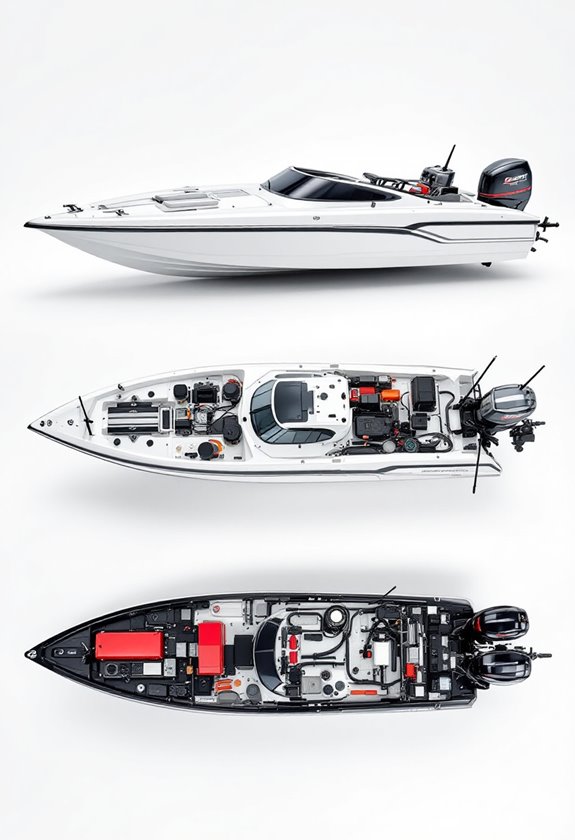
Which option is best suited for a sailor’s skill level—ready-to-sail boats or kit boats?
- Ready-to-Sail Boats: Ideal for beginners to intermediate sailors seeking immediate usability. No assembly means more time on the water, focusing on sailing techniques rather than construction nuisances. Best for family outings or weekend joys, these boats are designed for safety and reliability. Many models come with effective waterproofing features that enhance durability on the water.
- Kit Boats: Tailored for experienced builders or enthusiastic amateurs with woodworking skills. They demand patience and problem-solving in interpreting partial instructions. Not for the faint-hearted, kit boats require significant time before water-ready.
Ultimately, sailing experience and user preferences define the choice. Casual sailors often lean toward ready-to-sail boats, while hobbyists may find joy in the hands-on challenge of building a kit boat.
Quality and Performance: Comparing Factory Finishes to DIY Builds
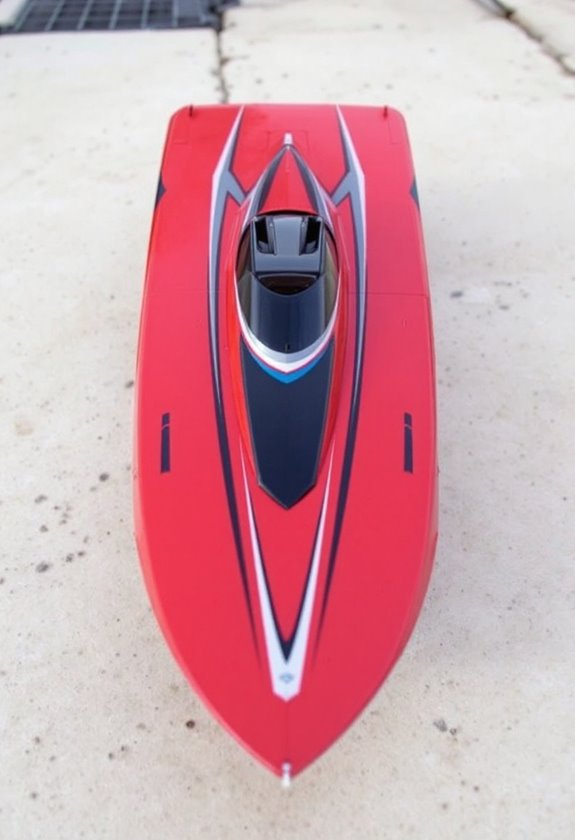
When considering the choice between ready-to-sail and kit boats, sailors must also evaluate the quality and performance aspects of their preferred option. Factory-finished boats are pet rocks of the sailing world—fully equipped, with guaranteed quality assurance. All components are ready for action, backed by robust quality control checks.
In contrast, DIY kits are a mixed bag.
- Builders may face incomplete materials or the need for additional sourcing, leading to unpredictable performance metrics.
- Assembly precision can vary widely, influencing speed and stability.
While factory boats undergo industrial processes ensuring high structural integrity, DIY builds root for adventure—yet they risk rough edges and uneven finishes. Ultimately, the decision hinges on weighing consistency against creativity in boating bliss. Additionally, battery life expectations vary significantly between models, affecting overall user experience and performance.
Recommended Products

DEPENDABLE STRENGTH — With a strong, welded steel build, this class 2 hitch is rated for 3,500 lbs. gross trailer weight and 300 lbs. tongue weight (limited to lowest-rated towing component)

Corrosion-Resistant Excellence - The Pacific Salt 2 enhances the proven Endura 4 design with superior ergonomics, textured grip, and a titanium pocket clip, all optimized for extreme resistance in marine environments.

Classic Design: Authentic Sailboat Concordia reproduction featuring traditional nautical styling and craftsmanship
Portability: Which Option Fits Your Lifestyle?
How does one choose between a ready-to-sail boat and a kit when considering portability? This decision hinges on lifestyle adaptability and portability advantages.
Size & Storage:
- Ready-to-sail boats require significant storage space—think boatyards and trailers.
- Kits, on the other hand, can fold into duffel-bag sizes, ideal for car trunks.
Transportation:
- Kits are lightweight and easily transportable, fitting into small vehicles or even as checked luggage.
- Ready-to-sail boats demand trailers and extensive launching setups.
Versatility:
- Portable options allow for spontaneous sailing—jackpot!
- They might lack some speed compared to their fixed counterparts but excel in convenience.
In essence, if mobility and adaptability define your sailing lifestyle, kits might be the perfect fit. Additionally, many kits are designed for various skill levels and assembly challenges, making them accessible to a broader range of enthusiasts.
Long-Term Investment: Maintenance and Upgrades
Deciding between a ready-to-sail boat and a kit leads not just to immediate sailing joy, but also to long-term implications that can shape one’s nautical journey for years to come.
Maintenance Costs
- Ready-to-sail boats typically lower *long-term costs* with warranties and professional assembly.
- In contrast, kit boats often incur higher expenses due to unpredictable maintenance and sourcing tricky parts.
Upgrade Strategies
- Kit boats offer extensive customization allowing tailored enhancements, but owners need technical skills.
- Ready-to-sail models provide easier upgrades with standard fittings, preserving better resale value.
Ultimately, your choice shapes not only your time on the water but how you manage costs and enhancements over years of ownership. Sail into the future well-informed!
Suitability for Different Sailing Styles
Understanding the suitability of different boats for various sailing styles can greatly enhance the overall experience on the water.
- Small Sailboats: Ideal for recreational cruising, models like the Walker Bay 8 prioritize ease of setup, making them perfect for casual outings.
- Performance Racing: Trimaran and catamaran designs attract seasoned sailors seeking speed and stability, but they demand advanced skills due to their complexity.
- Customization Potential: Kit sailboats offer extensive personalization, allowing builders to create a unique vessel, whereas ready-to-sail boats come optimized for immediate use, prioritizing simplicity.
Ultimately, each sailing style presents unique advantages, with boat choice notably impacting joy on the water. Whether it’s leisurely days or competitive racing, a boat tailored to the sailor’s needs enhances the adventure tremendously.
Budget-Friendly Alternatives: Used Boats and Sails
While many sailors dream of owning a brand-new boat, budget-conscious individuals often find themselves exploring the enticing world of used boats and sails. These used boat options can offer remarkable savings—often up to 12% off their original asking price—allowing enthusiasts to avoid the steep depreciation associated with new vessels.
Key considerations include:
- Sail Condition: With proper evaluation, sails can retain functionality for several seasons, making secondhand sails a smart choice.
- Research: Buyers are encouraged to conduct thorough inspections and utilize expert services, ensuring they select quality options.
Recommended Products

Windsurfing Sail Starter : If you have a dream of traveling around the world, or want to start a new skill, or want to find a new way to relieve stress and relax, and experience the adrenaline surge in your veins brought by sailing, choose the combination set of Spatium Inflatable Windsurfing Sail, which is both convenient to carry and cost-effective.

General Purpose Fiberglass: This 4 ounce fiberglass cloth is popular for a wide range of lightweight applications like laminating, reinforcing, sheathing and waterproofing. It is a flexible fabric and it wets out transparently.

✅High Conversion Efficiency: High conversion efficiency up to 23%, generates more energy and better performance than traditional panels in hot weather. Really impressive panels.
Community and Support for Kit Builders
The exhilaration of building a kit boat often extends beyond mere construction; it thrives within the vibrant communities that sprout from shared journeys and collective know-how. These communities, rich in community resources, offer invaluable support for builders of all skill levels.
- Online Forums: Active spaces like BoatDesign.net provide extensive discussions, tips, and project updates.
- Mentorship Opportunities: Newcomers often find guidance from seasoned builders who share detailed logs and solutions.
Builders exchange ideas about materials, tools, and safety, forging connections that foster camaraderie. Specialized subforums allow for focused discussions, while community events and virtual meet-ups enhance engagement. This collaborative spirit not only bolsters morale but also elevates the entire building experience.
The Benefits of Professional Craftsmanship
Professional craftsmanship in boat building brings a distinct advantage that resonates through each meticulously crafted vessel. The use of advanced craftsmanship techniques guarantees precision in every curve and joint, resulting in unmatched durability and performance.
- Safety First: Certified builders adhere to stringent safety regulations, enhancing structural integrity.
- Quality Control: Rigorous checks during production considerably reduce defects, guaranteeing reliability.
Moreover, the integration of cutting-edge materials, like advanced composites, contributes to lighter, stronger designs. Buyers enjoy ready-to-sail boats, eliminating the stress of assembly errors often made by amateurs.
With expert insight guiding design choices, professional builders can customize boats beyond the scope of standard kits. Ultimately, these qualities make professionally crafted vessels not only safer but also more enjoyable for sailing enthusiasts—guaranteeing peace of mind on every journey.
Recommended Products

3/8" STEEL AIRCRAFT CABLE - Thin, flexible and extremely strong, aircraft wire is one of the most useful types of steel cables available. This resilient cable design originated with aircraft and now serves a wide range of personal, commercial, industrial and military purposes.

POWERFUL PERFORMANCE: 40 HP 2-stroke outboard motor delivers reliable power for small to medium-sized boats, dinghies, and inflatable watercraft

COUNTLESS APPLICATIONS – Used for anything from boat rigging to guy wires.
Making the Right Choice for Your Sailing Goals
Choosing between a ready-to-sail boat and a kit involves more than just comparing prices; it’s about aligning with sailing aspirations and personal commitment levels.
- Immediate Use vs. Long-term Project: Ready-to-sail boats provide instant gratification; sail straight away! In contrast, kits invite deeper engagement, offering customization aligned with individual sailing goals.
- Skill Assessment: The project scope for kits requires woodworking, assembly, and sometimes plumbing skills—ideal for hands-on enthusiasts.
For those itching to hit the water, ready-to-sail options like the Sun Cat or Catalina 16.5 minimize hassle, perfect for recreational blitzes. Meanwhile, the kit route can be rewarding—but be prepared for the long haul in time and effort. Ultimately, aligning choices with sailing aspirations is paramount to journey satisfaction.
Frequently Asked Questions
What Are the Resale Values for Ready-To-Sail Versus Kit Boats?
Resale values for ready-to-sail boats typically align with strong market demand, showing better retention due to warranties and maintenance records. In contrast, kit boats exhibit varied resale trends dependent on build quality and niche appeal.
How Do Insurance Costs Differ Between These Two Types of Boats?
Insurance premiums differ markedly between boat types; ready-to-sail vessels typically incur higher rates due to their value, while kit boats face increased premiums if risk assessments deem them less reliable due to construction quality or lack of documentation.
Are There Specific Financing Options for Each Boat Type?
While financing options for ready-to-sail boats abound, offering favorable loan availability, kit boats present a financing puzzle, often suffering from limited options and higher interest rates due to their assembly nature and lender concerns.
What Warranties Are Typically Offered on Ready-To-Sail Boats?
Warranty coverage for ready-to-sail boats generally includes a general limited warranty for defects, structural warranties for key components, and manufacturer support for specific parts, typically lasting between 12 to 60 months, depending on the manufacturer’s policies.
Can I Convert a Kit Boat to a Ready-To-Sail Model Later?
Yes, a kit boat can be converted to a ready-to-sail model later; however, convertibility challenges exist due to assembly complexity and potential structural modifications needed for reinforcement and integration of sailing components.