As an Amazon Associate, we earn from qualifying purchases. Some links on this site are affiliate links at no extra cost to you. Our recommendations are based on thorough research and editorial judgment.

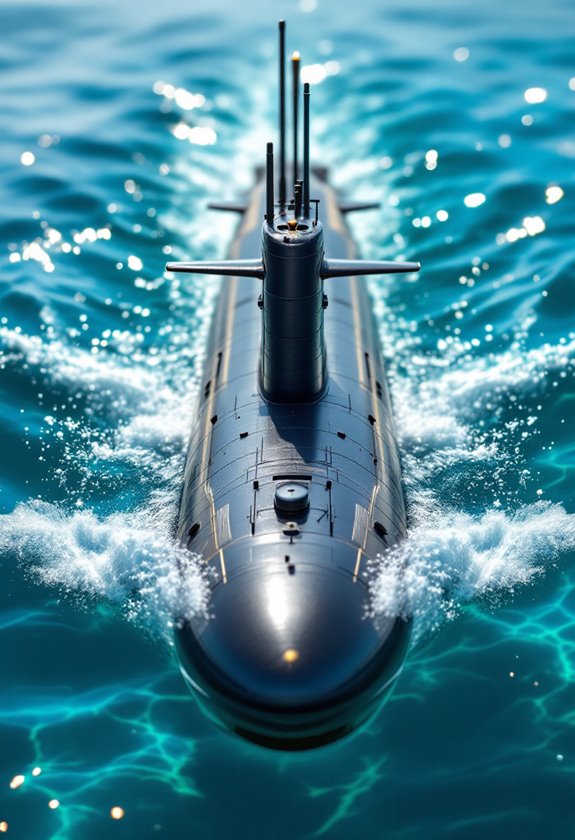
Secondhand RC Submarines: What To Check

When checking secondhand RC submarines, inspect several critical elements. First, consider the scale—larger models like 1:72 provide detail, while smaller ones offer agility. Evaluate the hull material; for instance, titanium is durable but pricey. Confirm that radio frequency systems allow reliable control, and inspect ballast and buoyancy systems for effective depth management. Finally, examine electronics like waterproof servos. Each feature affects performance like a good punchline—essential for a fun underwater adventure. More insights await!
Key Takeaways
- Inspect the hull material for signs of corrosion and ensure structural integrity through careful examination.
- Check the battery’s condition and life expectancy, as it significantly impacts operational performance.
- Verify the functionality of electronic components like the ESC, servos, and radio control systems for reliable operation.
- Ensure that ballast and buoyancy systems are intact and functional to maintain proper depth control.
- Research and confirm the availability of replacement parts for the specific model to ensure long-term usability.
Scale and Size Considerations
You may be interested



When diving into the world of secondhand RC submarines, scale and size considerations play a pivotal role in shaping the overall experience. Scale variability can range from 1:72 to 1:154, with larger scales such as 1:72 offering intricate detailing—think antennas and armaments—while smaller scales simplify these features due to space constraints. The size impacts not only visual realism but also functionality; larger models, for instance, boast more internal volume for advanced electronics.
Consider some common measurements:
- 1/120 scale hull: ~90 mm diameter
- 1:100 scale: ~172 cm long, 22.8 cm beam, displacing about 21 kg.
While heavier models provide stability, smaller submarines may be nimbler, yet limited in run time due to battery capacity. Additionally, factors such as battery life should be considered, as they can greatly affect your underwater adventure experience.
Hull Material and Durability
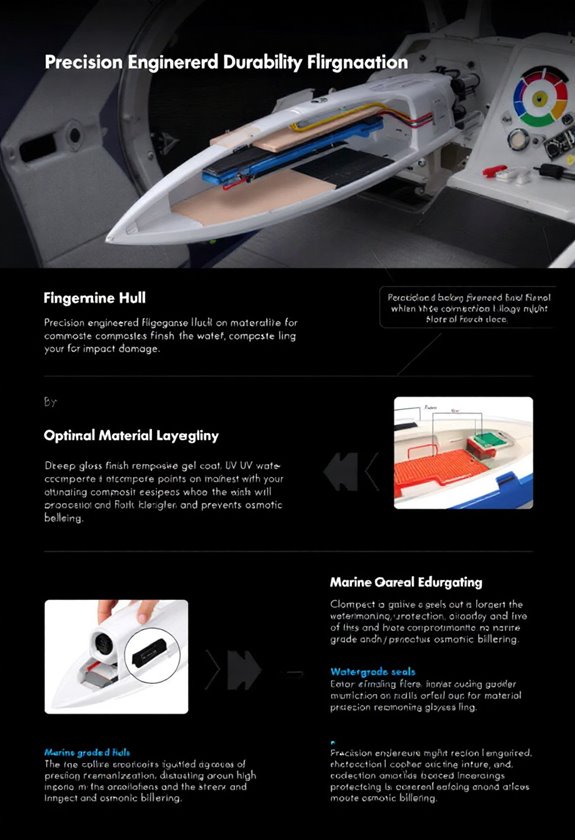
The choice of hull material in secondhand RC submarines greatly influences their durability and overall performance.
Key Materials:
- Steel Alloys: Renowned for strength and fatigue resistance, though prone to corrosion without proper coatings.
- Aluminum Alloys: Lighter and easier to fabricate, ideal for those prioritizing weight.
- Titanium Alloys: Expensive yet offer exceptional durability and corrosion resistance.
- Composites: Fiberglass and carbon fiber are lightweight and corrosion-resistant, gaining popularity in hobby circles.
Durability Needs:
Hull maintenance is paramount—seal joints and apply anti-corrosion coatings to fend off moisture. Regular check-ups enhance longevity, safeguarding your investment against the watery depths. Ultimately, choosing a durable material coupled with effective hull maintenance defines an RC submarine’s performance in aquatic adventures. Additionally, models constructed from sturdy materials tend to resist wear and tear better than those made from inferior substances.
Recommended Products

Multifunctional remote-controlled submarine: This nuclear submarine remote-controlled toy has 6 channels, which can realize diving/surfacing functions, and is equipped with two front navigation lights, which are flexible and diverse in operation.

Fast Speed & Extended Range >> Race across the water at 30 kmh max speed with 3 adjustable speed modes for every skill level. Enjoy long-range control up to 394ft (120m) and 18-20 minutes of run time per charge - plenty of time for nonstop aquatic adventures!
Radio Frequency and Control Systems
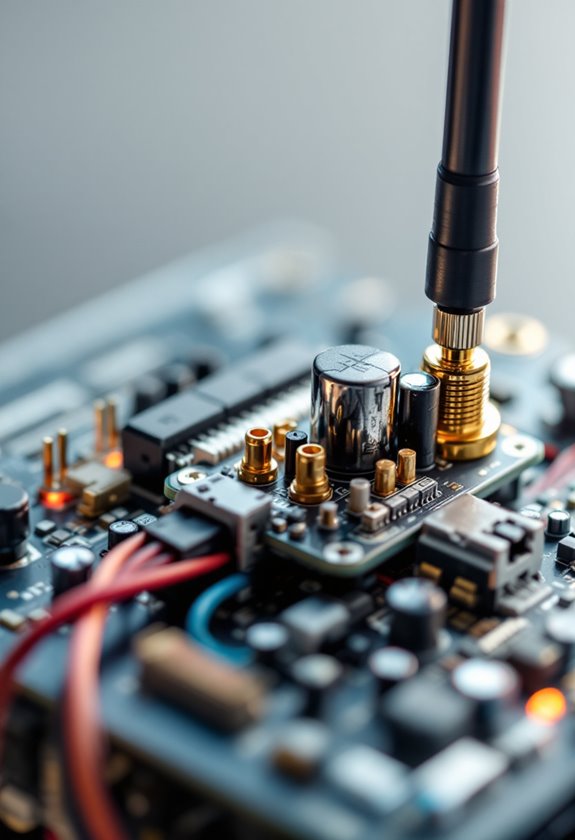
In steering through the murky depths of RC submarine technology, understanding radio frequency and control systems is essential for guaranteeing a smooth and responsive underwater experience. The choice of frequency plays a pivotal role in signal penetration—lower bands like 27 MHz and 40 MHz are ideal, as they navigate water much better than their 2.4 GHz counterpart, which struggles beyond periscope depth.
To optimize control reliability, operators should guarantee antennas are insulated and possibly extended above the water—an elegant periscope can be an effective solution. Additionally, avoiding electromagnetic interference from on-board electronics is vital. A clean power supply and meticulous wiring not only enhance signal integrity but also guarantee that your submarine remains under command—even when exploring the depths of your local pond. It’s also important to consider the average battery life of the submarine, as this can significantly impact your operational experience in the water.
Recommended Products

6-Channel Full Function RC Submarine:This remote-controlled submarine features 6 actions: go forward/backward, turn left/right, dive and surface. With 27MHz remote control, it delivers stable signal and smooth operation for kids to enjoy underwater fun

Detailed Deck Superstructure, Realistic Luxury Design
Ballast and Buoyancy Systems

Understanding ballast and buoyancy systems marks a significant step in mastering the artistry of RC submarines.
These systems are pivotal for controlling a submarine’s depth, operating mainly through:
- Ballast Tank Inspections: Regular checks are essential, as clear plastic tank designs allow for easy visibility of water levels.
- Buoyancy Control Mechanisms: They utilize air pumps and valve components to manage air and water levels.
When submerging, ballast tanks fill with water to increase density. Conversely, blowing compressed air into the tanks creates enough lift to surface. Operators must carefully monitor vent valves and servo linkages—failing to do so may cause unwelcome surprises underwater, such as suddenly surfacing like a cork! A sound understanding of these systems can truly enhance the thrill of operating an RC submarine. Additionally, ensuring proper weight capacity is critical for maintaining buoyancy and safe operation during underwater exploration.
Electronics and Mechanical Components
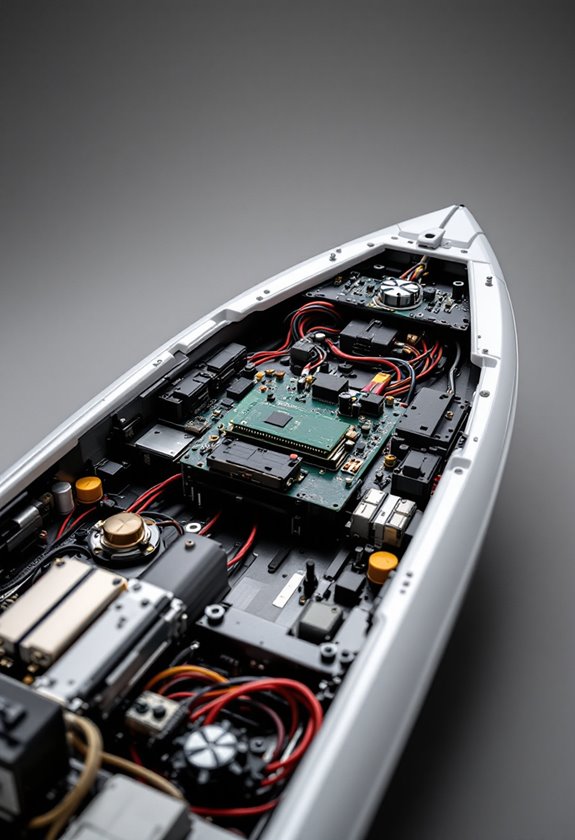
Diving into the world of electronics and mechanical components reveals the intricate framework that brings RC submarines to life. Key aspects include:
- Electronic Speed Controllers (ESC): These units translate transmitter inputs into precise voltage outputs, enabling smooth motor operations. Proper circuit compatibility with motor type and battery voltage—typically between 7V and 14V—is vital to avoid damage.
- Servo Specifications: Servos control important functions like pitch and ballast valves. Waterproof or water-resistant models are recommended due to potential moisture exposure.
- Battery Eliminator Circuits (BEC): Integrated within ESCs, BECs guarantee stable power delivery to servos, reducing voltage from the main drive batteries to the 5–6V range, essential for reliable operation. Additionally, ensuring proper waterproof integrity of all components greatly enhances the longevity and performance of secondhand RC submarines.
Recommended Products

270° Digital Servo: built-in brush motor and stable motherboard, precise angle without deviation.

Note: LD-20MG model has been renamed as HPS-2018MG as part of our brand's upgrade.

25kg Servo: rc servo high torque built-in brush motor and stable motherboard, precise angle without deviation.
Cost and Buying Tips
The landscape of secondhand RC submarines offers a fascinating blend of opportunity and challenge for enthusiasts and newcomers alike. Cost analysis reveals entry-level used models can range from $350 to $1,000, while advanced options soar beyond that. Here are some buying tips to navigate this waters:
- Verify the operational condition before purchase—missing parts can sink your budget.
- Research pricing trends to guarantee you’re getting a fair deal—after all, knowledge is power.
- Check for replacement components easily found online; it saves headaches later.
- Choose well-known brands; they often provide better resale value and support. Additionally, ensure the model has features like robust waterproof design to enhance longevity and performance during use.
Recommended Products

XT60 to 4 Channel XT60 Plug Power Distribution Board Optional Base Shel

Realistic simulation operation: This remote-controlled submarine can move forward, backward, turn left, turn right, as well as dive and surface, perfectly recreating the sailing experience of a real submarine in the ocean, bringing endless fun to children.

Realistic simulation operation: This remote-controlled submarine can move forward, backward, turn left, turn right, as well as dive and surface, perfectly recreating the sailing experience of a real submarine in the ocean, bringing endless fun to children.
Frequently Asked Questions
How Can I Verify a Submarine’s Water Resistance Before Purchasing?
To verify a submarine’s water resistance, one should conduct thorough water seal testing and assess hull integrity. Inspect seals for wear, visually examine the hull for cracks, and perform functional tests to confirm waterproof capacity.
What Maintenance Is Required for Secondhand RC Submarines?
Maintaining secondhand RC submarines requires regular hull cleaning to prevent corrosion and guarantees battery longevity through proper charging and storage. Routine inspections and preventive measures help maintain performance and extend the submarine’s operational lifespan effectively.
Are There Specific Brands Known for Reliability in RC Submarines?
In the underwater domain of RC submarines, brand comparisons reveal Youcan Robot and Kamoro achieving high reliability ratings through advanced features, while Sea Peep and Silverlit cater to novices, emphasizing user-friendly designs and dependable performance.
Can I Upgrade a Plastic Hull to Fiberglass Easily?
Upgrading a plastic hull to fiberglass is not easy due to significant differences in material behavior. Hull upgrades necessitate complex processes, including mold creation and detailed resin application, making successful changes challenging for enthusiasts.
How Do I Troubleshoot Common RC Submarine Problems?
To troubleshoot common RC submarine problems, one should employ various techniques: check batteries, verify connections, inspect electronic components, and assess buoyancy systems. Addressing these areas greatly enhances performance and resolves many prevalent issues faced by users.