As an Amazon Associate, we earn from qualifying purchases. Some links on this site are affiliate links at no extra cost to you. Our recommendations are based on thorough research and editorial judgment.


Parallel vs. Series Battery Configurations

Parallel and series battery configurations play critical roles in energy systems. In a series setup, batteries connect end-to-end, boosting voltage—two 12V batteries create 24V. Conversely, parallel connections maintain voltage while amplifying current; two 100Ah batteries yield 200Ah. The safety stakes are high with series—one failure can spell disaster—while parallel configurations need balanced cells to prevent overheating. Each approach has unique maintenance challenges. Understanding these nuances is essential for optimizing performance across diverse applications. Curious about what’s next?
Key Takeaways
- Series configurations increase voltage while limiting current to that of a single cell, ideal for high-voltage applications.
- Parallel configurations maintain voltage and double current capacity, suitable for steady voltage needs and backup power.
- Safety is a concern in series circuits due to single cell failure impacting the entire system; diligent monitoring is essential.
- Maintenance is easier in parallel setups as individual cells can be replaced without affecting the whole system.
- Series-parallel configurations combine benefits of both methods, requiring careful management for optimal performance and battery longevity.
Understanding Series and Parallel Connections
When exploring battery configurations, it becomes vital to understand the distinct characteristics of series and parallel connections—two fundamental methods that dictate how batteries work together.
Series Connections
– In a series setup, batteries connect end-to-end, positively to negatively. This boosts total voltage but keeps the current capacity the same as a single cell.
Parallel Connections
– Conversely, parallel arrangements link positive terminals together and negative terminals together, maintaining voltage while multiplying capacity.
Cell Balancing
– Proper cell balancing is essential in both types, ensuring consistent performance. Batteries with high discharge rates can also benefit from careful configuration to maximize performance.
Large battery packs often combine these connection types, like a 4s2p configuration—four in series for voltage, two in parallel for increased capacity. Understanding these configurations allows users to tailor power solutions to their specific needs, enhancing efficiency and usability.
Voltage Output Differences

Battery configurations distinctly influence voltage output, a significant aspect for anyone diving into the world of energy storage. In series connections, voltages add up; linking two 12V batteries results in a robust 24V total. This setup excels in high-demand applications like electric vehicles. Conversely, parallel connections maintain the original voltage—two 12V batteries still yield 12V—ideal for steady voltage needs and backup during battery failure.
This consistency can enhance battery lifespan and simplify voltage regulation across systems. While series boosts voltage for efficiency, parallel configurations increase amp-hour capacity, effectively balancing performance and endurance. Each choice presents unique advantages, but understanding voltage output is essential in designing effective and reliable energy systems. Additionally, proper battery types selection can significantly influence overall performance in applications such as RC boats.
Current Capacity Characteristics

Exploring current capacity characteristics reveals an important aspect of battery configurations that directly affects performance and application suitability. In series configurations, the current capacity remains limited to that of a single battery. This means that regardless of how many batteries are connected, the maximum current available is defined by one battery’s specifications—great for voltage needs but with notable current limitations. Conversely, parallel configurations shine by dramatically increasing total current capacity, allowing for higher discharge rates. For instance, two 100Ah batteries in parallel yield 200Ah, perfect for demanding applications. While series setups excel in high-voltage scenarios, paralleling batteries offers flexibility—adaptable to varying energy needs without sacrificing voltage. As a result, understanding these characteristics is crucial for optimizing battery systems, especially in applications like high-speed RC boats that require reliable performance.
Energy Capacity and Total Watt-Hours
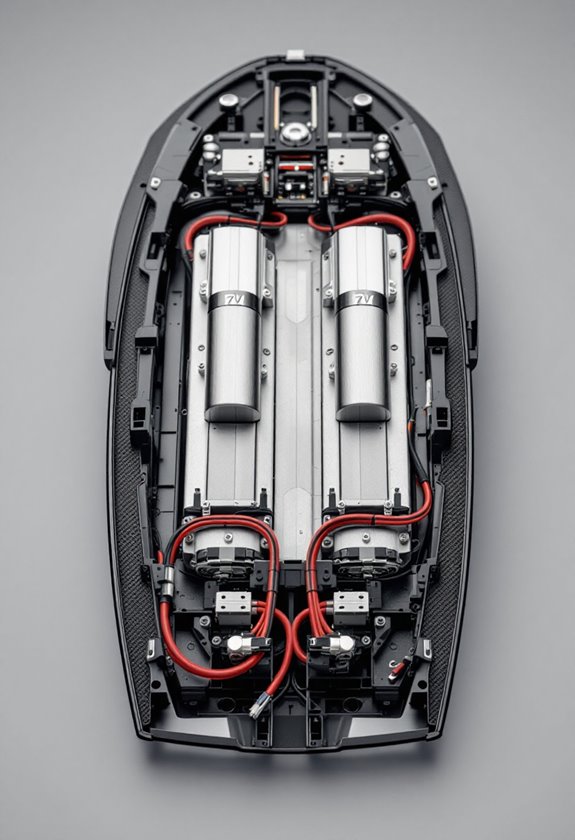
Ultimately, whether in series or parallel, the total watt-hours available from a battery bank remains the same; it’s the distribution of voltage and current that varies, enabling a tailored approach to energy needs.
- Series Configuration: Increases voltage while keeping capacity static at amp-hours. For instance, four 12V 100Ah batteries yield 48V at 100Ah, totaling 4800 Wh.
- Parallel Configuration: Maintains voltage but amplifies capacity. The same four batteries produce 12V at 400Ah, also hitting 4800 Wh.
Both setups highlight the impressive energy density and efficiency metrics of battery systems. While the watt-hours remain untouched, users can cater configurations to their specific demands, benefitting devices that favor either higher voltage or longer runtimes. The choice of battery type can also play a significant role in achieving optimal performance for high-speed applications like RC boats.
Safety and Reliability Concerns

When configuring battery systems, safety and reliability are paramount concerns that demand careful consideration. Both series and parallel configurations present unique safety hazards. For series setups, high voltage ratings can lead to dangerous conditions if not managed properly. A single cell failure could cause a cascade of malfunctions—imagine a domino effect of failed cells, potentially leading to thermal runaway.
Conversely, while parallel configurations are generally more robust, they can still pose risks. Imbalanced cells may result in overheating, causing one battery’s failure to spread heat to others—like a mini inferno. Both configurations require diligent monitoring and management systems to mitigate failure consequences. Proper insulation, secure connections, and balanced charging are essential to avoiding catastrophic outcomes, ensuring safety remains a priority. Additionally, high capacity batteries are encouraged to enhance runtime and minimize risks associated with inadequate power delivery.
Flexibility and Maintenance Implications
Flexibility in battery configurations profoundly impacts both design and maintenance, a factor that can influence the success of various applications, from electric vehicles to renewable energy systems.
- Parallel Configurations: These enhance capacity and simplify maintenance. Single-cell replacements are straightforward—simply swap one without voltage interruption, saving time and cost.
- Series Configurations: These raise voltage but complicate maintenance strategies. A failure in one cell can bring the entire system down, leading to urgent repairs.
- Mixed Configurations: A combined approach offers balance but requires meticulous flexibility analysis and management to prevent uneven wear.
Ultimately, the choice of configuration not only affects performance but also the ease of upkeep, making understanding flexibility and maintenance implications essential for any battery-based system. This is similar to the importance of waterproof features that protect electronics in all-weather RC boats, which are crucial for reliable operation in variable conditions.
Applications and Typical Use Cases
Battery configurations play an important role in a diverse range of applications, shaping how energy is stored and utilized in everyday life.
Renewable Integration:
- Parallel setups extend runtime without raising voltage—ideal for solar storage.
- Series-parallel combinations boost capacity and voltage for large-scale solar.
- These systems excel in off-grid solutions, handling high current needs.
Emergency Vehicles:
- Parallel configurations guarantee redundancy, keeping critical hardware, like medical devices, running.
- They offer better charging capabilities and operational stability.
Consumer Electronics:
– Devices such as laptops often use series-parallel packs—balancing voltage and capacity reliably.
Effective battery management guarantees longevity and performance in all applications, making configurations crucial for energy efficiency and reliability.
Recommended Products

Reliable LiFePO4 Technology: Our 16-cell LiFePO4 battery boasts an impressive lifespan of 2500 to 7000 cycles over 10 years. Equipped with an advanced Battery Management System (BMS), it's safeguarded against overcharging, deep discharges, overloads, overheating, short circuits, low temperature cut-off, and boasts an exceptionally low self-discharge rate.

【32153Wh LiFePO4 Battery】 Dawnice’s newest line of batteries –2 sets 51.2V 314Ah LiFePO4 battery provides 6000+ cycles & a 10 years lifetime with built-in 100A Battery Management System (BMS) protects it from overcharge, deep discharge, overloading, overheating and short circuit, and excessive low self-discharge rate. Support in parallel up to 16 sets, can be expanded in the future.
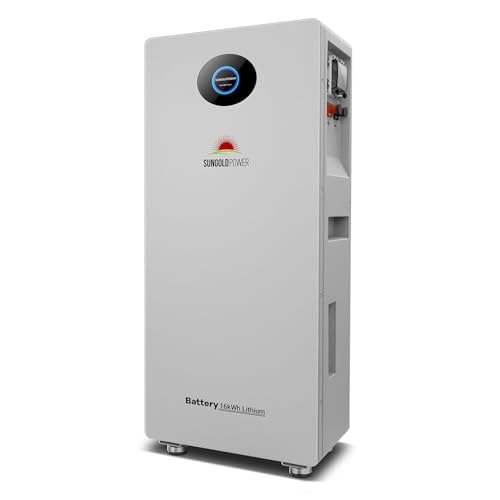
[High Capacity Solar Battery]: SUNGOLDPOWER UL1973 and UL9540A 48V 314Ah LiFePO4 lithium battery with over 8,000 deep cycles. Parallel up to 16 pcs ,maximum capacity of 16.07kWh.Ideal for solar systems, off-grid living, and whole-home backup power with reliable long-lasting performance.
Series Wiring: Advantages and Disadvantages
In various scenarios, series wiring emerges as a powerful contender for maximizing voltage output in energy systems. It offers higher voltage by summing each battery’s output, making it ideal for systems demanding 24V or 48V. This configuration reduces current flow—allowing for thinner, less expensive cables—thus improving efficiency.
However, series wiring comes with notable disadvantages. All batteries must be identical in capacity and state of charge; otherwise, it risks imbalances that can diminish battery lifespan. A failure in just one battery halts the entire system, causing potential downtime. Proper charge management is vital to maintaining uniformity and avoiding damage. In short, while series wiring can enhance voltage and reduce costs, it requires diligent monitoring and uniform battery selection for best function.
Recommended Products

【Grade A solar cells】 : The long-lasting UL61730 550W monocrystalline grade A solar cells, the waterproof design ensures that the panel can be used in all weather conditions.
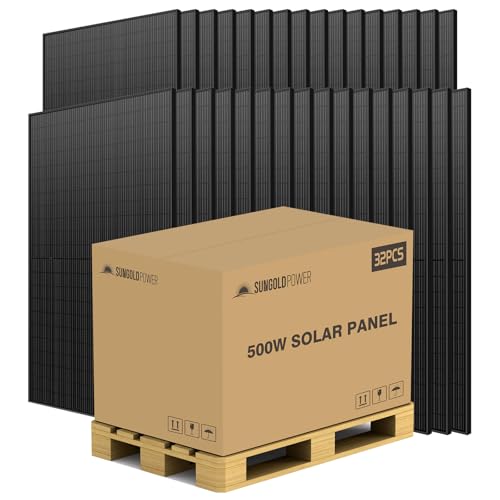
【Powerful and Save Space】: SUNGOLDPOWER 500W monocrystalline solar panel can produce up to 2500Wh of electricity per day with smaller space compared to 5pcs 100W or 2pcs 250W solar panels
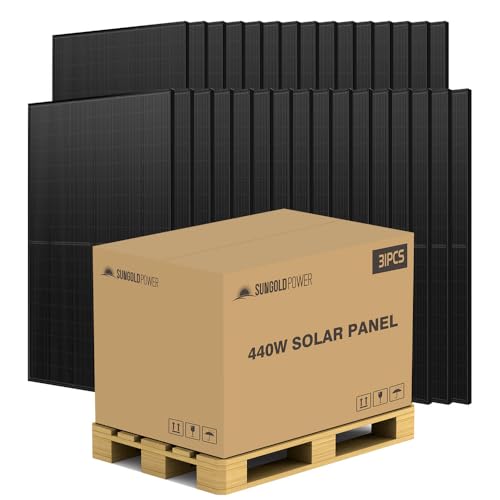
【High Efficiency N-Type Technology】SUNGOLDPOWER 440 Watt N-Type solar panels 16BB delivers superior performance with advanced N-Type cells and 16 busbar (16BB) design, offering up to 22.5% module efficiency and excellent low-light performance.
Parallel Wiring: Advantages and Disadvantages
When exploring energy storage systems, parallel wiring stands out as a star player, particularly for its ability to boost overall capacity while maintaining a constant voltage. This configuration allows for impressive capacity scaling; when two 12V 100 Ah batteries connect in parallel, total capacity doubles to 200 Ah without increasing voltage.
However, maintaining safety measures is essential. High current flow demands thicker cables, and improper wiring complexities can lead to dangerous overheating.
While the charging efficiency is enhanced due to uniform voltage, mismatched batteries can create devastating imbalances. Such issues require meticulous management and monitoring systems to guarantee longevity.
Recommended Products

LiFePO4: ExpertPower’s newest line of batteries – The No.1 Sealed Lead Acid Battery Seller on Amazon. Our LiFePO4 battery provides 2500 - 7000 cycles & a 10 years lifetime with built-in Battery Management System (BMS) protects it from overcharge, deep discharge, overloading, overheating and short circuit, and excessive low self-discharge rate ensuring up to 1 year maintenance-free storage. Built-in low-temp cut off prevents charging under 23 °F (-5 °C).

LiFePO4: ExpertPower’s newest line of batteries – The No.1 Sealed Lead Acid Battery Seller on Amazon. Our LiFePO4 battery provides 2500 - 7000 cycles & a 10 years lifetime with built-in Battery Management System (BMS) protects it from overcharge, deep discharge, overloading, overheating and short circuit, and excessive low self-discharge rate ensuring up to 1 year maintenance-free storage. Built-in low-temp cut off prevents charging under 23 °F (-5 °C).

Start and stop with ease from up to 80 feet away with the included wireless remote key fob – push-button power and convenience like never before, plus features CO Shield carbon monoxide auto shutoff system.Engine Speed : Variable. Wheel Type : Solid.
Series-Parallel Configurations
Exploring the series-parallel configuration reveals a remarkable approach to energy storage that marries the strengths of both series and parallel setups. This configuration allows for voltage optimization by connecting battery groups in series while boosting capacity through parallel connections. It’s a clever way to achieve higher voltage requirements, especially in applications like electric vehicles and solar energy systems.
However, this innovative design requires meticulous battery balancing. Without careful monitoring, imbalances can arise, ultimately risking battery degradation. Advanced battery management systems (BMS) are essential to guarantee uniform charge and discharge. To sum up, series-parallel configurations offer flexibility and redundancy, making them a favored choice for tailored power solutions while demanding attention to detail in setup and maintenance.
Recommended Products
-4℉ Low-Temperature Charging Capability: Special low-temperature electrolyte enables safe charging in extreme cold without cell damage, supporting reliable operation down to -4℉ and delivering 6,000+ long-life cycles.

ULTIMATE ENERGY INDEPENDENCE comprehensive system includes Guardian 6000 (4608Wh), one G5 Extra Battery (4608Wh), and four 240W solar panels for complete off-grid capability.

Self-Heating Function: Automatically activates when charging at -20°C to 5°C (-4°F to 41°F). Choose between Regular and Energy-efficient heating modes via the LiTime APP for optimal cold-weather performance.
Choosing the Right Configuration for Your Needs
Key considerations when choosing include:
- Battery Lifespan: Series configurations can diminish lifespan due to a weaker cell impacting the whole pack.
- Maintenance Tips: Regularly check both configurations for balance; in series, ascertain even charge across batteries, while in parallel, watch for current imbalances.
Ultimately, selecting the right configuration hinges on specific needs—higher voltage or greater capacity—making careful matching and vigilant maintenance crucial for success, power, and peace of mind.
Recommended Products

𝐓𝐫𝐮𝐜𝐤 𝐏𝐚𝐥𝐥𝐞𝐭 𝐒𝐡𝐢𝐩𝐩𝐢𝐧𝐠 - 𝐏𝐥𝐞𝐚𝐬𝐞 𝐂𝐨𝐧𝐟𝐢𝐫𝐦 𝐀𝐝𝐝𝐫𝐞𝐬𝐬 𝐀𝐜𝐜𝐞𝐩𝐭𝐚𝐧𝐜𝐞: Due to the battery's weight of 130 kg and capacity of 15 kWh, it is shipped using a professional truck pallet. Please confirm your delivery address allows truck access and unloading before placing your order. This is not a regular courier package and cannot be placed at a collection point or parcel locker.

This package include 4 pack of Power Queen 12.8V200Ah PLUS LiFePO4 batteries.Your order may be divided into multiple packages due to size/volume restrictions , when you only receive one package please don't worry, just wait the second one patiently. Any questions please feel free to contact us.

【AAA Grade Cells】The Cxeny 24V 200Ah lithium iron phosphate battery uses AAA grade lithium ion battery cells, which can provide more stable and higher times of discharge efficiency, which has a longer service life. It is the preferred power supply for RV, truck camper, travel trailer and off-grid, as well as household energy storage.
Future Trends in Battery Configuration Technologies
As the world embraces a future powered by cleaner energy sources, the evolution of battery configuration technologies stands at the forefront of innovation. Emerging technologies promise significant advancements:
- Solid-State and Sodium-Ion Batteries: These alternatives enhance safety and sustainability, tackling supply constraints while offering higher energy densities.
- Cathode and Anode Innovations: With up to 90% nickel in cathodes and silicon integration in anodes, energy density surges.
- Fast Charging: Moving to 800V architectures allows vehicles to recharge in mere minutes, revolutionizing user experience.
- Grid Integration: Hybrid systems and advances in IoT diagnostics enhance stability and efficiency for renewable energy sources.
These battery innovations are not just about power; they reflect a commitment to sustainability, redefining future energy landscapes with each breakthrough.
Frequently Asked Questions
Can I Mix Battery Brands in Series or Parallel Configurations?
Mixing battery brands in any configuration poses significant risks. Brand compatibility and battery chemistry must align for peak performance. Experts recommend using identical batteries to prevent imbalances, inefficiency, and potential safety hazards in both series and parallel setups.
How Does Temperature Affect Battery Performance in Different Configurations?
Temperature effects like a raging storm create significant performance variations in batteries, exacerbating degradation rates in parallel configurations. Uneven temperatures lead to imbalanced current distributions, while series configurations may experience greater susceptibility to premature failures from temperature discrepancies.
What Is the Impact of Aging on Battery Performance in Series vs. Parallel?
Aging effects considerably influence battery performance, with series configurations suffering more from performance degradation due to capacity limitations imposed by weaker cells, while parallel setups experience uneven current loads that exacerbate aging and efficiency disparities.
Do I Need Special Equipment for Series-Parallel Configurations?
Yes, special equipment is necessary for series-parallel configurations. Appropriate installation guidelines dictate the use of special connectors, battery management systems, and protection devices to guarantee safety, performance, and longevity of the battery pack.
How Can I Monitor Battery Health in a Series or Parallel Setup?
In a world where batteries age like fine wine, one must wield monitoring tools and adhere to battery maintenance tips diligently. Individual cell observations and tracking temperature guarantee longevity in the face of impending doom—voltage discrepancies lie in wait.


