As an Amazon Associate, we earn from qualifying purchases. Some links on this site are affiliate links at no extra cost to you. Our recommendations are based on thorough research and editorial judgment.


Servo Selection for Winch and Rudder

Selecting the right servo motor for winch and rudder applications hinges on essential factors. Key specifications include torque ratings—aim for 11 to 13.2 kg·cm—to guarantee powerful performance. Mechanical features like adjustable linkages provide customization, while IP68 ratings ensure moisture protection for underwater use. Additionally, consider control modes, such as position control for precision tasks. Combine these elements, and you have a recipe for reliability. Curious about the nuances of these choices? There’s plenty more to explore!
Key Takeaways
- Select servos with torque ratings of 11 to 13.2 kg·cm for effective winch performance and reliable rudder control.
- Consider brushless motors for enhanced efficiency and durability, reducing power losses during operation.
- Ensure servos have appropriate IP ratings, like IP68, for moisture protection in underwater environments.
- Utilize adjustable linkages for fine-tuning servo arm positions, improving accuracy in control applications.
- Implement different control modes such as torque and position control to meet specific operational demands of winches and rudders.
Understanding Servo Motor Specifications
Understanding servo motor specifications is essential for anyone venturing into the world of automated systems, where precision and reliability reign supreme. Servo motor classifications primarily fall into two categories: AC and DC. DC motors, with their quirky brushes and commutators, yield torque based on armature current, while their brushless counterparts are like the cool kids—low maintenance and highly efficient.
One important aspect to take into account is encoder resolutions, which provide crucial feedback for accuracy. Digital encoders can achieve resolutions up to 23-bit, enabling finely tuned control. When selecting a servo motor, factors like nominal speed (ranging from 1500 to 8000 rpm) and construction type must align with application demands, ensuring peak performance, much like choosing the perfect gear for a thrilling ride. Additionally, understanding battery life can be critical for maximizing operational efficiency in underwater applications.
Power and Torque Requirements

The performance of winch and rudder servos hinges on a careful balance of power and torque requirements, ensuring they can handle various loads and operational demands.
- Torque Ratings: Winch servos generally need torque in the range of 11 to 13.2 kg·cm (approximately 153 to 183 oz-in). For specific tasks, higher torque can reach up to 160 oz-in at 7.4 V.
- Current Draw: Current draw varies considerably. Winches may idle at 8 mA, escalate to 230–285 mA under no load, and spike to 1.3 to 1.8 A at stall.
Additionally, understanding battery life is crucial for ensuring that the servos maintain performance over extended periods.
Consequently, efficient servo design becomes essential. Features such as brushless motors and metal gears can mitigate power losses and enhance durability, making servo selection a blend of precision engineering and practicality.
Recommended Products
Country Of Origin: China

【Motor parameters】Model: A2M-80SV03230; With brake: No; Power: 1000W; Number of poles: 5 pairs; Rated power supply: 220V; Rated speed: 3000r/min; Peak speed: 6000r/min; Rated torque: 3.8 N.m; Max torque: 11.4 N.m; Rated current: 4.8A; Max current: 14.4A; Ender Resolution: 10000ppr; Protection structure: IP65; Impact strength: 98m/s²; Vibration resistance: 49m/s².

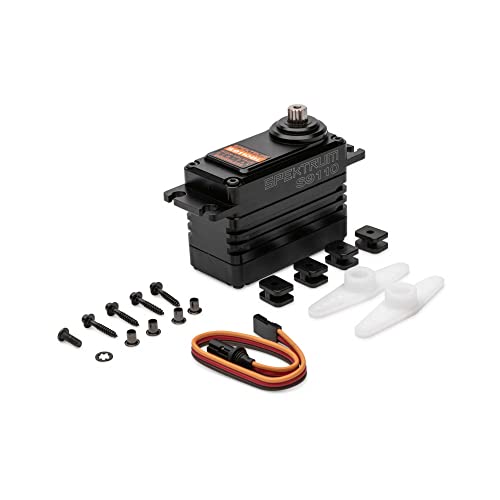
Unmatched 100KG High Torque Performance- Boasting an incredible torque of 100kg/cm (1380oz-in), this servo is designed to handle the most demanding tasks in 1/8 and 1/10 RC crawlers, trucks, cars, buggies, and robotic applications, ensuring powerful and precise operation.
Key Mechanical Integration Features
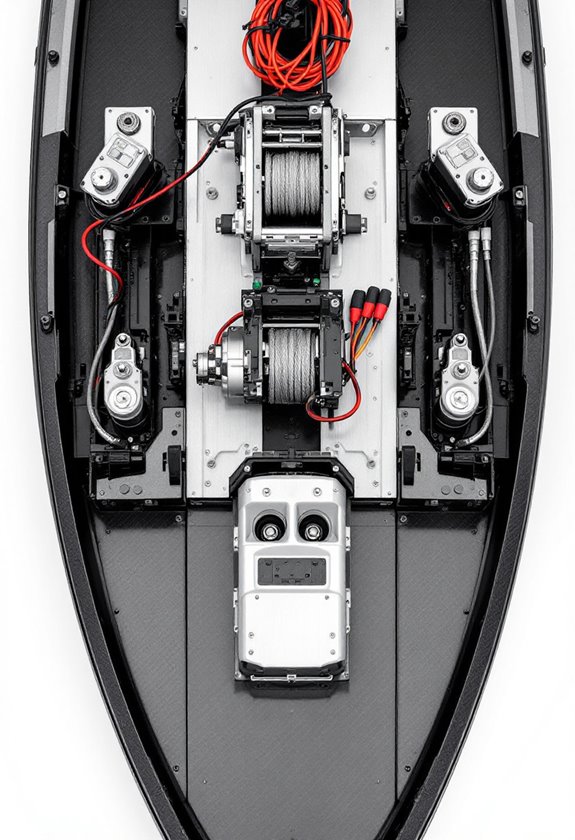
Selecting the right servo for winch and rudder systems goes beyond merely evaluating power and torque; it also hinges on effective mechanical integration features. Precision in alignment is crucial—servo mounting points must fit seamlessly with winch drums or rudder arms to guarantee smooth operation.
Key features include:
- Mechanical Stops: These limit over-travel, protecting sensitive components from damage.
- Adjustable Linkages: They allow fine-tuning of servo arm position and travel, accommodating variances in system tolerances.
Utilizing reinforced mounting brackets distributes loads effectively, minimizing structural stress. Additionally, quick-disconnect fittings simplify maintenance, enabling swift removal and replacement of servos—like changing a tire on a race car, just without the pit crew! Balancing these elements can greatly enhance reliability and efficiency, ensuring a robust mechanical setup. Incorporating safety features such as over-voltage protection is also crucial to safeguard electronic components during operation.
Environmental Durability Considerations
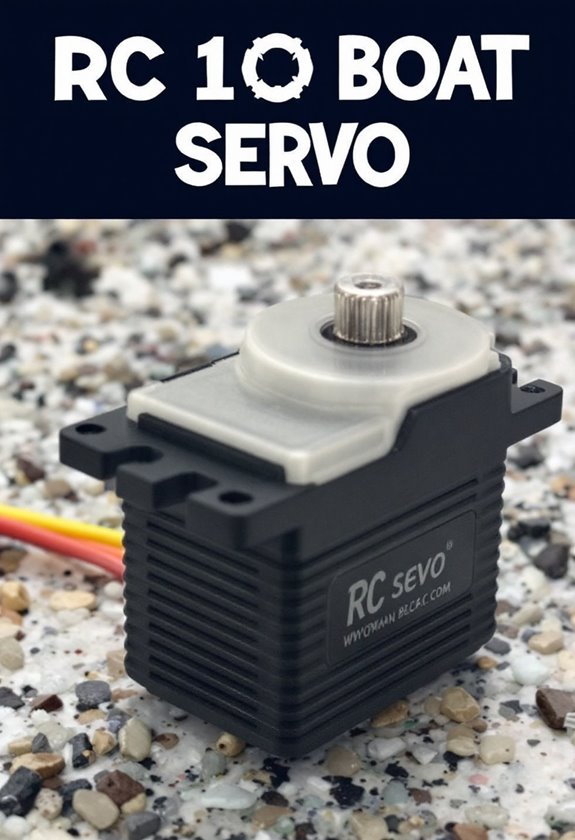
Environmental durability considerations play an essential role in guaranteeing the longevity and reliability of servos in demanding applications like winches and rudders. The selection of appropriate IP ratings—such as IP68 for underwater use—protects against moisture and environmental exposure, preventing premature failure.
Corrosion resistance is important; materials like stainless steel or hard coat anodized aluminum withstand harsh marine conditions. Protective coatings—like epoxy—shield surfaces from harsh chemicals and saltwater.
Heat management strategies, including integrated cooling systems and thermal sensors, help maintain ideal temperatures, especially under heavy loads.
Regular maintenance strategies, like inspections and recoating, guarantee durability, while keeping dust and debris at bay is essential for efficient operation. When combined, these factors create resilient systems ready to face the elements. Additionally, the incorporation of advanced GPS technology in your RC systems can enhance your fishing experience by improving navigation and precision.
Control Modes in Servo Motor Operation

In the domain of servo motors, understanding control modes is essential, as they determine how effectively a system can respond to various demands. There are three primary control modes:
- Torque Control Mode: Ideal for constant torque needs, this mode offers fast responses simply by adjusting motor current. Perfect for tasks like winding lines, it’s like having an instant muscle for your mechanism.
- Position Control Mode: This mode prioritizes accuracy, controlling both position and speed, akin to a meticulous artisan ensuring every cut is precise. The trade-off? Slower responses!
- Speed Control Mode: Strike a balance between torque and position. It steadies speed, making it great for applications where velocity reigns supreme.
Each mode showcases unique advantages depending on the control algorithms and application needs, influencing overall performance and system complexity. Furthermore, understanding control range capabilities can enhance the effectiveness of these modes in practical applications.
Application-Specific Selection Criteria
When it comes to choosing the right servo motor for specific applications, several key factors play a critical role in guaranteeing ideal performance.
Torque Requirements
- Conduct thorough load assessments to determine continuous, peak, and acceleration torques. Use the formula \( T = F imes r \)—where ‘F’ is force and ‘r’ is the lever arm length—tailoring it to your application environments.
- Don’t forget safety margins! Normally, a factor of 1.2–1.5 times the nominal torque should suffice.
Inertia Matching
– Aim for an excellent inertia ratio of 1:1 to enhance responsiveness.
Environmental Considerations
– Evaluate conditions like humidity and exposure, guaranteeing the motor has the required IP ratings to thrive under stress. Additionally, ensuring that the servo’s waterproof and rust protection features align with the operational environment is crucial for longevity.
Selecting the right servo is an intricate dance, but attention to these criteria guarantees harmony between performance and reliability.
Recommended Products

Impact Resistant Polycarbonate Hull

Brushless Motor & High Torque – Delivers ultra-high torque, fast response, and long-lasting performance.

Traxxas 2280 - 600 Series High Torque Waterproof Servo, 1/10 Scale
Frequently Asked Questions
How Do I Calculate the Total Load on a Winch Servo?
To calculate total load on a winch servo, one must consider load calculation combining inertial, load force, and friction torques, ensuring torque requirements are met for both peak and continuous operating conditions, ensuring system efficiency.
What Is the Difference Between Brushed and Brushless Servo Motors?
Brushed and brushless servo motors differ fundamentally. Brushed motors employ mechanical commutation, while brushless models utilize electronic commutation. Current technology favors brushless motors in applications like drones and robotics for efficiency, durability, and precision.
Can a Servo Be Used for Applications Outside of Winch and Rudder?
Coincidentally, servo applications extend far beyond traditional uses, finding alternative uses in automation across various industries. They enable precise control in robotics, medical devices, automated assembly lines, and dynamic environments, showcasing their versatility and functionality.
How Do Temperature Extremes Affect Servo Motor Performance?
Temperature extremes adversely affect servo motor performance by increasing electrical resistance, reducing motor efficiency, and jeopardizing torque output. Elevated temperatures can cause internal friction and mechanical wear, ultimately compromising overall system reliability and positional accuracy.
What Maintenance Is Required for Marine Servo Motors?
Marine servo motors thrive in salt-kissed environments, needing diligent care. Regular oil changes guarantee smooth operation, while corrosion prevention measures deflect rust’s relentless grip, safeguarding delicate components and enhancing performance against the tide of the elements.


